

Beyond Furniture: The Essential Guide to the HiFi Equipment Rack
What if the most vital instrument in your pursuit of sensory perfection isn't the amplifier or the DAC, but the very foundation they rest upon? It's a common misconception that a hifi equipment rack is merely a storage solution. In reality, it's a precision-engineered acoustic component designed to anchor your system. When your gear sits on standard furniture, you're often left fighting muddy bass response and the jarring interruption of turntable feedback. These vibrations act like a veil, obscuring the delicate textures of your music and preventing your components from reaching their full potential.
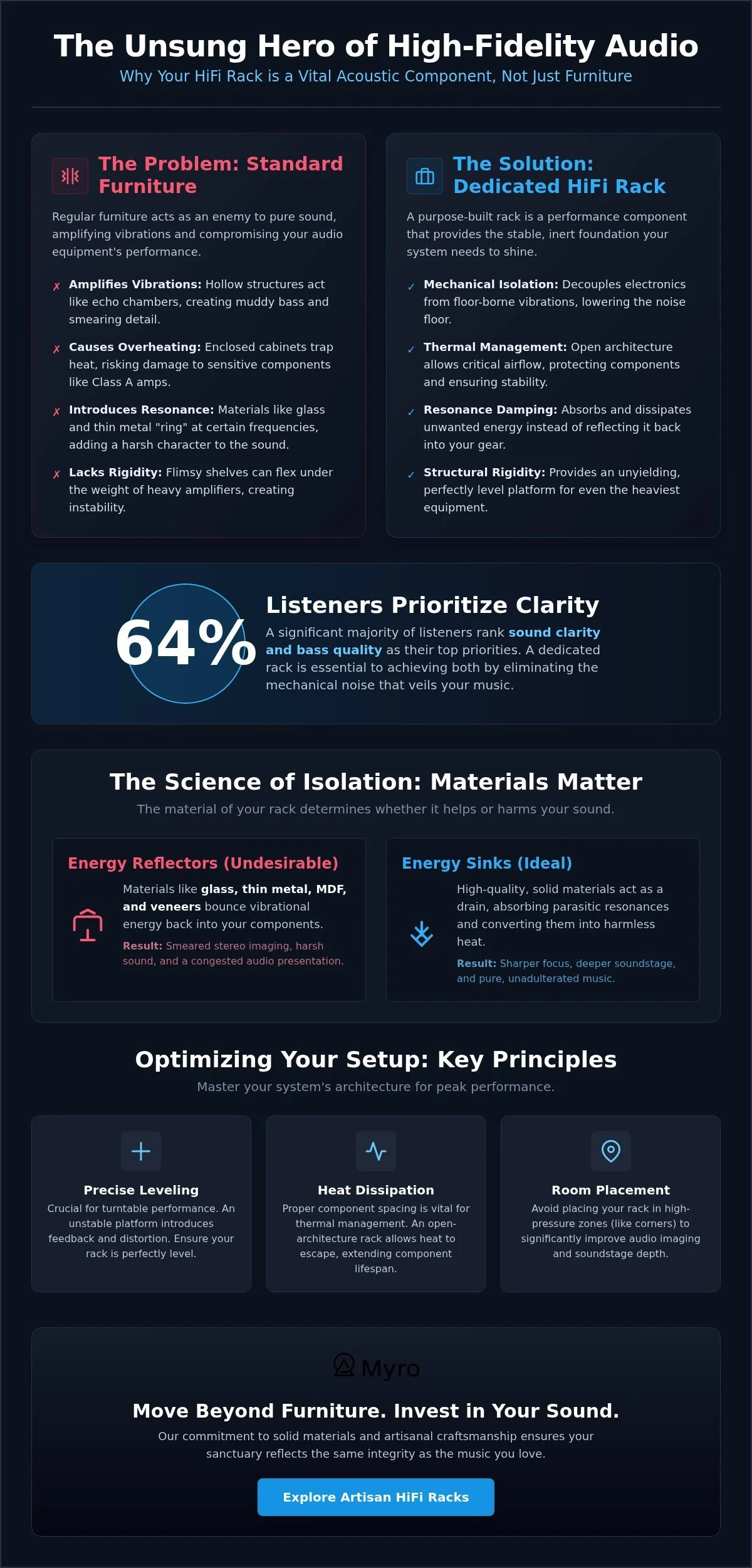
We understand that 64% of listeners prioritize sound clarity and bass quality above all else. You've invested deeply in your collection, and you deserve to hear every nuance exactly as the artist intended. This guide will show you how a dedicated rack transforms your listening experience from simple playback to pure, resonant perfection. We'll examine the technical necessity of vibration isolation, the beauty of manual craftsmanship, and how a refined setup protects your electronics while elevating your personal sanctuary. It's time to move beyond simple furniture and discover the definitive promise of high-fidelity sound.
Key Takeaways
Learn why a hifi equipment rack is a vital acoustic component that manages resonance rather than just a shelf for your gear.
Discover how selecting high-quality materials can turn your support system into a functional energy sink, eliminating the vibrations that muddy your sound.
Master the art of system architecture by balancing component spacing for heat dissipation with the precise leveling required for turntable performance.
Understand how room placement and the avoidance of high-pressure zones can significantly improve your audio imaging and soundstage.
Explore the artisanal philosophy behind our commitment to solid materials, ensuring your sanctuary reflects the same integrity as the music you love.
Table of Contents
The Science of Isolation: How Materials Influence Acoustic Performance
Evaluating Your System: Choosing the Right Rack Architecture
Optimizing Your Setup: Placement and Installation Essentials
What is a HiFi Equipment Rack and Why Does It Matter?
A hifi equipment rack is far more than a place to stack your electronics. We view it as the silent partner in your signal chain; a specialized support system designed to manage the invisible forces that degrade your music. In our pursuit of Stereophonic sound, we strive for absolute purity. However, every component in your system is susceptible to micro-vibrations. These physical tremors increase the noise floor of your system, masking the fine detail and spatial cues that make a recording feel alive. When we talk about the signal-to-noise ratio, we aren't just discussing electrical interference. Physical vibration is a form of mechanical noise that creates a veil over your audio, turning a sharp, resonant performance into something dull and congested.
Think of the rack as the foundation of your high-fidelity ecosystem. While many see it as an aesthetic choice, its primary role is performance-driven. It acts as a mechanical filter, ensuring that the only thing your speakers reproduce is the music itself, not the hum of a transformer or the resonance of a wooden floor. It’s a common mistake to treat the rack as an afterthought. We believe the foundation is just as important as the signal itself. By providing a stable, inert platform, a dedicated hifi equipment rack allows each component to function at its peak, free from the external energy that compromises delicate circuitry. Similarly, for the aesthetic foundation of your broader living space, ReModern Living offers contemporary European furnishings that prioritize both form and function.
The Problem with Standard Furniture
Most domestic furniture isn't built for the rigors of high-end audio. Hollow bookshelves and thin sideboards often act as echo chambers, amplifying micro-vibrations rather than dissipating them. If you store your gear in enclosed cabinets, you risk component overheating. This is a significant concern for Class A or vacuum tube amplifiers that require constant airflow to remain stable. Materials like glass or thin metal are equally problematic. They tend to "ring" at specific frequencies, introducing a harsh, clinical character into your audio signal. Standard furniture is a compromise; it’s built for books or lamps, not for the delicate task of preserving a musical performance. However, for other areas of your home where the focus is on luxury and comfort, ritzhouzz.sg provides premium furniture solutions that maintain a high standard of elegance.
The Primary Functions of a Dedicated Rack
A purpose-built hifi equipment rack serves three critical needs. First is mechanical isolation. It decouples your sensitive electronics from floor-borne energy through carefully engineered contact points. Second is thermal management. By providing an open architecture, it allows heat to rise away from your components, extending their lifespan and maintaining performance. Finally, there is structural rigidity. High-quality amplifiers often house massive, heavy transformers. A standard shelf might flex under this weight, but a dedicated rack remains perfectly stable. Our Reference Myro HiFi Rack is built with this uncompromising rigidity in mind, moving beyond the limitations of MDF and veneers to provide a truly solid foundation for your sanctuary.
The Science of Isolation: How Materials Influence Acoustic Performance
The soul of a hifi equipment rack lies in its material composition. In the world of acoustics, materials behave as either energy sinks or energy reflectors. An energy reflector, like glass or hard plastic, allows vibrations to bounce back into your components, creating a feedback loop that smears the stereo image. Conversely, an energy sink absorbs these parasitic resonances, drawing them away from the sensitive circuitry of your DAC or turntable. We believe that true high-fidelity sound requires a platform that acts as a silent drain for mechanical noise. Resonance damping is the elegant conversion of kinetic energy into trace heat, ensuring that unwanted vibrations never reach the sensitive heart of your components.
This is why we maintain an uncompromising stance against MDF and veneers. While these materials are common in mass-produced furniture, they lack the internal friction necessary for true acoustic damping. MDF is essentially compressed dust and glue; it lacks the organic, fibrous integrity required to effectively dissipate energy. When you place a high-end amplifier on a veneer-covered composite, you aren't providing it with a stable home. You're placing it on a surface that stores and releases energy at unpredictable frequencies. By choosing high-density, natural materials, we ensure that the noise floor remains as low as possible, allowing the natural timbre of your music to shine through.
Solid Hardwood vs. Composite Materials
The natural cellular structure of solid hardwood is a marvel of acoustic engineering. Unlike uniform composites, the varying grain patterns and organic fibers of wood act as a complex labyrinth for vibrations. As energy travels through the wood, it is constantly redirected and absorbed by these natural cells. This process provides superior internal friction, which is vital for neutralizing micro-tremors. You can explore this further in our detailed look at The Science of Vibration Damping in Solid Hardwood. Using raw, high-quality timber isn't just an aesthetic choice; it’s a commitment to the art of listening.
The Role of Mass and Rigidity
Mass is your primary defense against external interference. A heavy-duty hifi equipment rack lowers the resonant frequency of the entire system, making it less susceptible to the energy moving through your room. This is particularly critical for analog gear. Turntables are essentially vibration-measuring devices; any movement that isn't the needle in the groove is distortion. As noted by Bob Katz on Loudspeaker Isolation, managing how energy moves through a structure is fundamental to achieving clarity. Our "Reference" level supports utilize higher mass and non-resonant joints to provide the absolute stability required for sensitive gear. For those seeking a balance of this technical excellence and timeless design, our Classic Myro HiFi Rack offers a sophisticated starting point for any serious system.
Evaluating Your System: Choosing the Right Rack Architecture
Your audio system is a living entity. It evolves as your taste matures and your collection grows. Designing your setup requires more than just measuring dimensions; it demands an understanding of system synergy. A hifi equipment rack must be tailored to the specific thermal and mechanical needs of your gear. Before selecting a support, we suggest performing a deep assessment of your current component list. Are you housing high-gain vacuum tube amplifiers, or is your system built around modern digital streamers? Each piece of equipment interacts with its environment differently, and your rack architecture should reflect these nuances.
Amps: Require maximum airflow and high-mass support.
DACs and Streamers: Sensitive to high-frequency micro-vibrations despite low heat output.
Turntables: Demand absolute isolation from floor-borne energy and acoustic feedback.
Power Conditioners: Benefit from being separated from sensitive signal-carrying components.
Reference vs. Classic Designs
Choosing between our core designs depends on the sensitivity of your system. We suggest the Reference Myro HiFi Rack for high-gain systems where every micro-vibration is amplified. Its increased mass provides a definitive promise of stability. For standard listening rooms where a balance of performance and understated beauty is key, the Classic Myro HiFi Rack is an exceptional choice. You can find a deeper dive in our guide Comparing Reference vs. Classic HiFi Rack Designs.
Special Considerations for Turntables
The top shelf is the place of honor for a turntable. This component is essentially a vibration-measuring device, making it the most vulnerable to floor-borne footfall and mechanical noise. The interaction between a stylus and the groove is incredibly delicate; even the slightest shelf flex can smear the audio imaging. We recommend utilizing specialized Turntable Isolation Platforms to ensure your analog playback remains pure and resonant. When the foundation is right, the music feels effortless.
Optimizing Your Setup: Placement and Installation Essentials
Selecting the right location for your hifi equipment rack is a decision that balances aesthetic grace with acoustic reality. Many enthusiasts instinctively place their support system directly between their speakers. While this creates a symmetrical visual, it often positions your sensitive electronics in a high-pressure zone where acoustic energy is most intense. This can lead to unwanted interference and a compromised soundstage. We suggest placing your rack in a lower-pressure area of the room, away from corners where bass energy tends to accumulate and muddy the response. By moving the foundation of your system out of these acoustic hotspots, you allow the music to breathe with greater clarity.
Installing your system also requires a mindful approach to your environment. If you have hardwood floors, the use of floor protectors is essential. These allow the isolation spikes to drain energy effectively without scarring the timber of your personal sanctuary. It is a delicate harmony between protecting your home and preserving the purity of your sound. Just as you invest in acoustic purity, ITAMILANO provides premium filtration systems to ensure purity in your home's wellness spaces. Once the location is set, the focus shifts to the technical precision of the assembly itself. Every connection and every adjustment is a step toward sensory perfection.
The Logic of Leveling
Perfect leveling is non-negotiable for high-fidelity performance. A rack that is even slightly tilted can cause uneven wear on turntable bearings and significantly affect the tracking force of your stylus. We recommend using a high-quality spirit level on every tier as you build the structure. Start at the base, adjusting the spikes to compensate for any unevenness in your floor, and work your way up. For a detailed walkthrough on this process, you can follow our guide on How to Level Your Modular HiFi Rack. Absolute stability is the definitive promise of a well-installed system.
Cable Dressing and Airflow
The space behind your hifi equipment rack often becomes a "rat’s nest" of wires, which creates two primary issues: heat soak and electromagnetic interference. To prevent this, we suggest creating "air gaps" between your components. Power lines should be kept separate from signal cables; if they must cross, do so at a ninety-degree angle to minimize noise. An open-back design, like our Minimal Myro HiFi Rack, is superior for high-current power amplifiers. It ensures that heat rises away naturally, preventing the thermal fatigue that can degrade your electronics over time. Proper cable dressing makes component swapping easier and keeps the focus on the artisanal beauty of your setup.
Artisanal Excellence: The HiFi Rack Approach to Sound
At the heart of every hifi equipment rack we create is a story that begins in our Novi Sad workshop. Here, multi-generational family traditions meet a modern obsession with acoustic perfection. We don't view our work as mere manufacturing; we see it as a form of instrument building. Each piece is born from a deep respect for raw materials and a commitment to the art of listening. This isn't mass production. It’s a slow, deliberate process where every joint and every surface is refined by hand to ensure your system has the foundation it deserves.
Similarly, for those who wish to see how these design principles translate to the retail world, you can explore Ladenbau and discover how professional environments are meticulously crafted with the same attention to structural integrity and aesthetic harmony.
Our "No MDF, No Veneer" philosophy isn't just a technical stance; it’s a commitment to integrity. We've discussed how these materials fail to manage resonance in previous sections. By choosing solid hardwoods like Walnut or Oak, we provide a hifi equipment rack that is both acoustically inert and visually stunning. These aren't temporary solutions. A bespoke support is a legacy piece, designed to serve your passion for a lifetime and beyond. It’s an investment in the longevity of your electronics and the enduring beauty of your listening room, much like how bespoke fitted wardrobes london provide a tailored and lasting solution for your home’s storage needs.
This commitment to high-quality timber and artisanal construction often extends to other areas of the home; for those who appreciate master woodworking in their furniture, you can visit The Mensa Table Company to explore their guide on the art of handmade dining tables.
Handcrafted in Serbia
Our process starts with the careful selection of timber. We look for specific grain densities that offer the best damping properties for high-end audio. This artisanal pride translates into tighter tolerances than any factory-line product can achieve. When every shelf fits with precision, the entire structure becomes more stable, leading to a noticeable improvement in sound clarity. It’s the difference between a piece of furniture and a precision-tuned instrument. You can learn more about our commitment to sustainable, high-quality sourcing on our HiFi Rack Responsibility page.
The Union of Performance and Aesthetics
You shouldn't have to choose between a beautiful home and a high-performance audio system. We believe the two should exist in perfect harmony. For those with modern, understated listening spaces, the Minimal Myro HiFi Rack offers a clean aesthetic without sacrificing the isolation your gear requires. It’s the definitive promise of our brand: performance and aesthetics joined as one. Ready to elevate your sanctuary? Explore the full range at the HiFi Rack Shop and find the vital instrument your system is missing.
Secure Your Acoustic Legacy
Your journey toward sensory perfection ends where it began: with a solid foundation. We've explored how a dedicated hifi equipment rack serves as a mechanical filter, stripping away the vibrations that obscure your music's soul. By moving away from resonant composites and embracing the organic power of solid hardwood, you ensure your system performs without compromise. Whether you're optimizing thermal gaps or perfecting the level of your turntable, every adjustment brings you closer to that definitive promise of pure sound.
Our workshop in Novi Sad, Serbia, continues a multi-generational family tradition of woodworking excellence. We maintain a strict zero MDF or veneer policy because we believe your gear deserves better than industrial waste. Each piece is handcrafted to be a vital instrument in your pursuit of audio truth. With global shipping available, the sanctuary you've envisioned is within reach. To complement your high-end audio setup with other premium entertainment furniture, you can check out The Family Game Room and explore their selection of quality gear. It's time to ground your passion in craftsmanship that's built to last a lifetime.
Discover the Myro Series HiFi Racks and experience the harmony between form and function. The music is waiting.
Frequently Asked Questions
Do HiFi racks actually improve sound quality?
Yes, a dedicated hifi equipment rack significantly improves sound quality by managing resonance and lowering the noise floor. When micro-vibrations are drained away from sensitive electronics, the audio imaging becomes sharper and the bass response tightens. You'll notice a clearer sense of space and detail in your favorite recordings. It's not just a shelf; it's a performance-enhancing component that allows your gear to reach its full potential.
What is the best material for a HiFi equipment rack?
Solid hardwood is widely considered the superior material for hifi supports due to its natural cellular structure. Unlike uniform synthetic materials, the organic fibers in woods like Oak and Walnut act as a labyrinth that dissipates kinetic energy as trace heat. This natural damping property prevents parasitic resonances from reaching your components. We prioritize these raw, high-quality materials to ensure a stable and inert foundation for your sanctuary.
Why should I avoid MDF or veneer in my audio furniture?
You should avoid MDF and veneers because they lack the internal friction required for effective acoustic damping. MDF is essentially compressed dust and glue, which tends to store and release energy at unpredictable frequencies rather than dissipating it. This can introduce a "smeared" quality to your sound. We believe in using only solid materials to maintain the integrity of the signal chain and provide a lasting legacy piece.
How much weight can a standard HiFi rack support?
Our hifi equipment rack designs are engineered to support significant weight, often exceeding 80kg per shelf depending on the specific model. High-end power amplifiers frequently house massive transformers that require this level of structural rigidity. We ensure that our solid hardwood tiers remain perfectly stable under heavy loads. This prevents any shelf flex that could compromise the mechanical integrity or the sound of your system.
Does every component need its own shelf?
Yes, providing each component with its own shelf is the best practice for both thermal management and vibration isolation. Stacking gear directly on top of each other creates "heat soak" and allows electrical interference to pass between units. Individual shelves ensure that air flows freely around amplifiers and that each piece of equipment benefits from the rack’s decoupling properties. This organization also makes cable management much simpler.
How do spikes and floor protectors work with a HiFi rack?
Spikes serve as mechanical diodes, focusing the weight of the rack onto a tiny surface area to drain energy into the floor. This decoupling process is vital for isolating your gear from floor-borne vibrations. Floor protectors are used beneath these spikes to preserve your hardwood or stone surfaces without sacrificing acoustic performance. This combination ensures that vibrations move away from your components while your personal sanctuary remains unharmed.
Is it better to have a tall rack or several short ones?
Multiple short racks are generally preferred for maximum stability and lower resonant frequencies. A lower center of gravity reduces the risk of sway and minimizes the impact of room-borne energy. However, a single tall rack is often a more space-efficient solution for smaller listening rooms. If you choose a taller architecture, ensure it possesses the mass and rigidity needed to maintain a silent foundation for your components.
Can I use a regular TV stand instead of a HiFi rack?
A regular TV stand is rarely suitable for high-fidelity audio because it lacks specialized resonance management. Most mass-produced stands are made from thin composites that act as echo chambers for micro-vibrations. They also frequently lack the open architecture required for the proper cooling of high-current amplifiers. To achieve pure, resonant perfection, a purpose-built hifi equipment rack is a necessary investment in your system’s performance and longevity.