


Myro Classic HiFi Rack
Built for rooms with character, not just systems
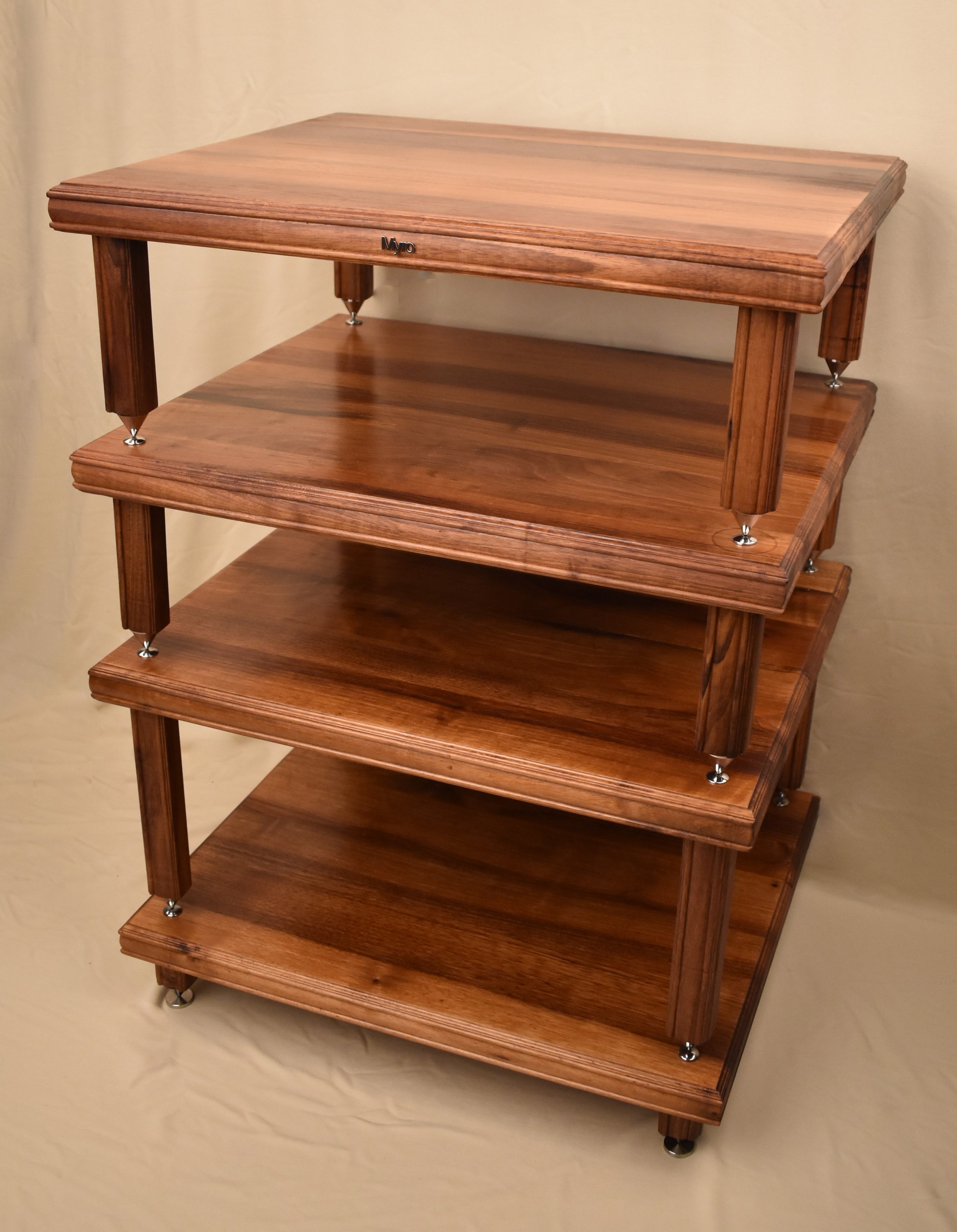
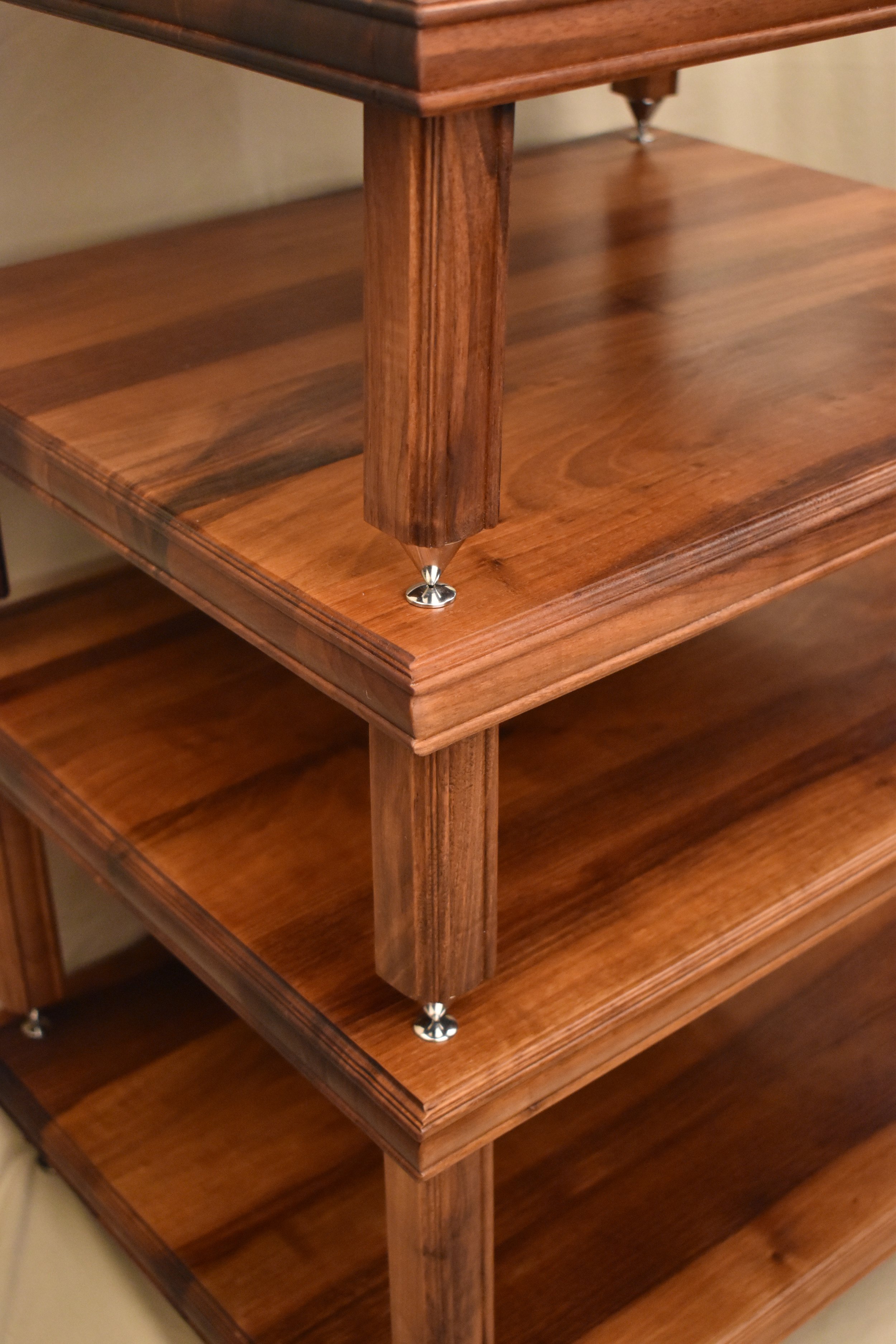
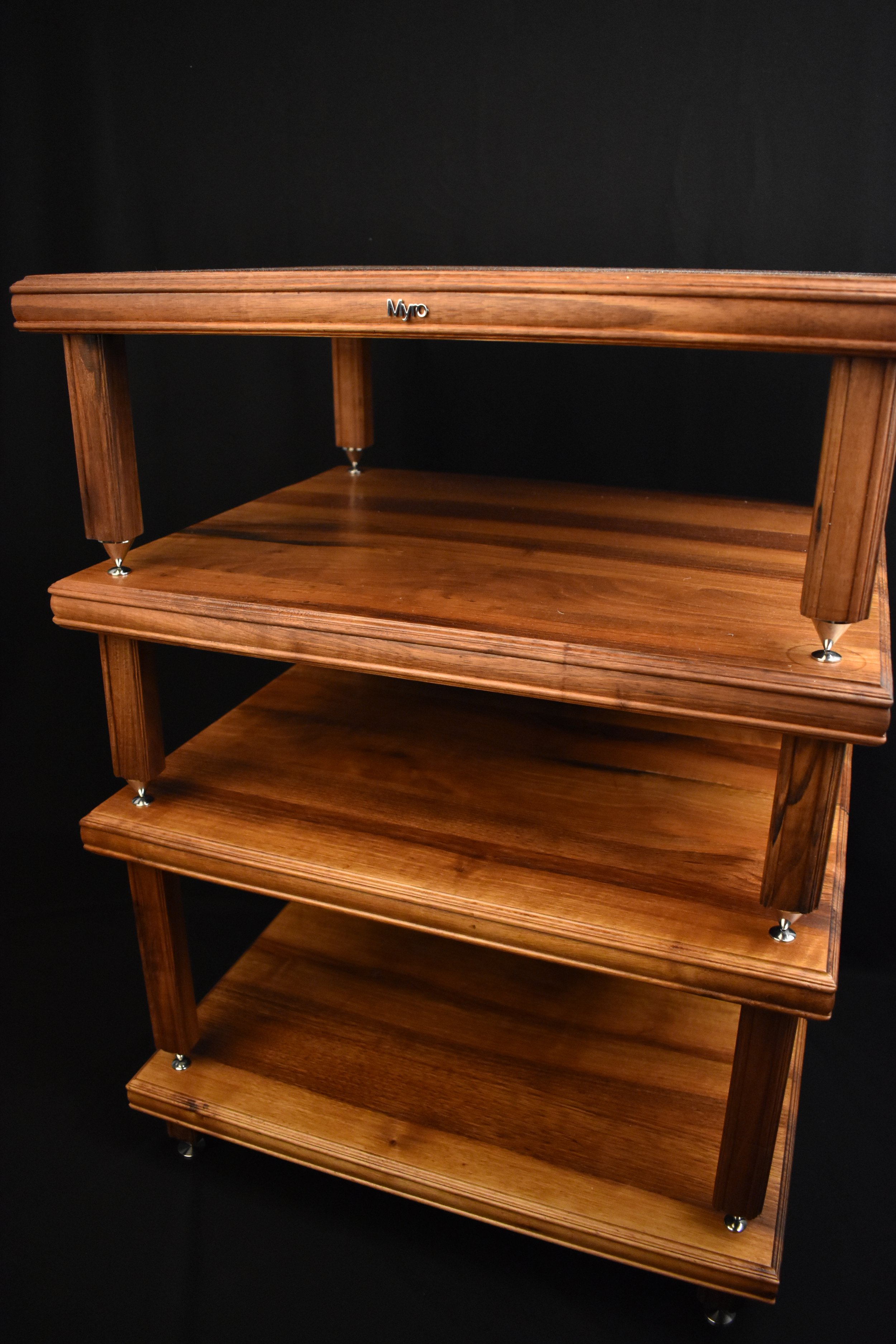
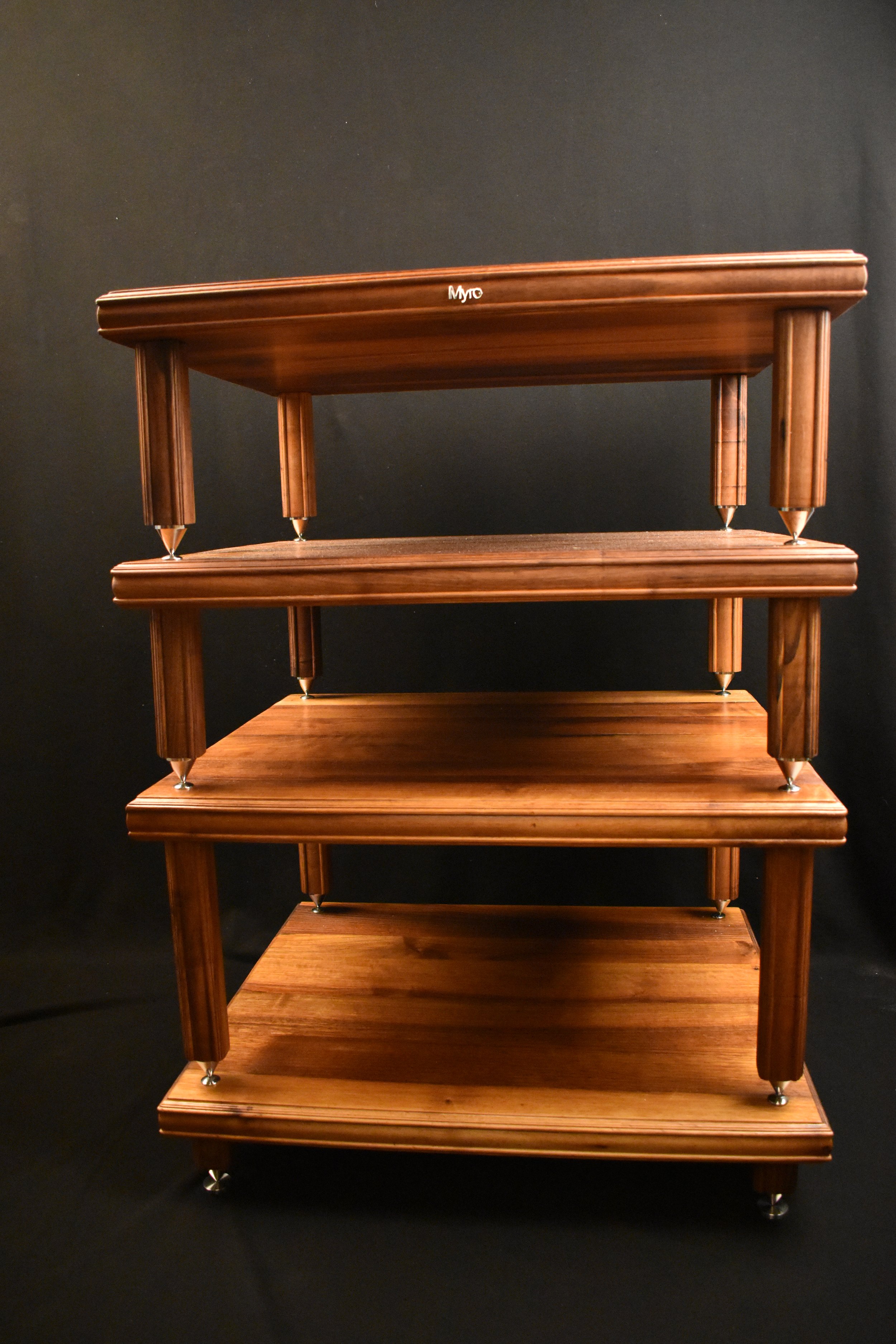
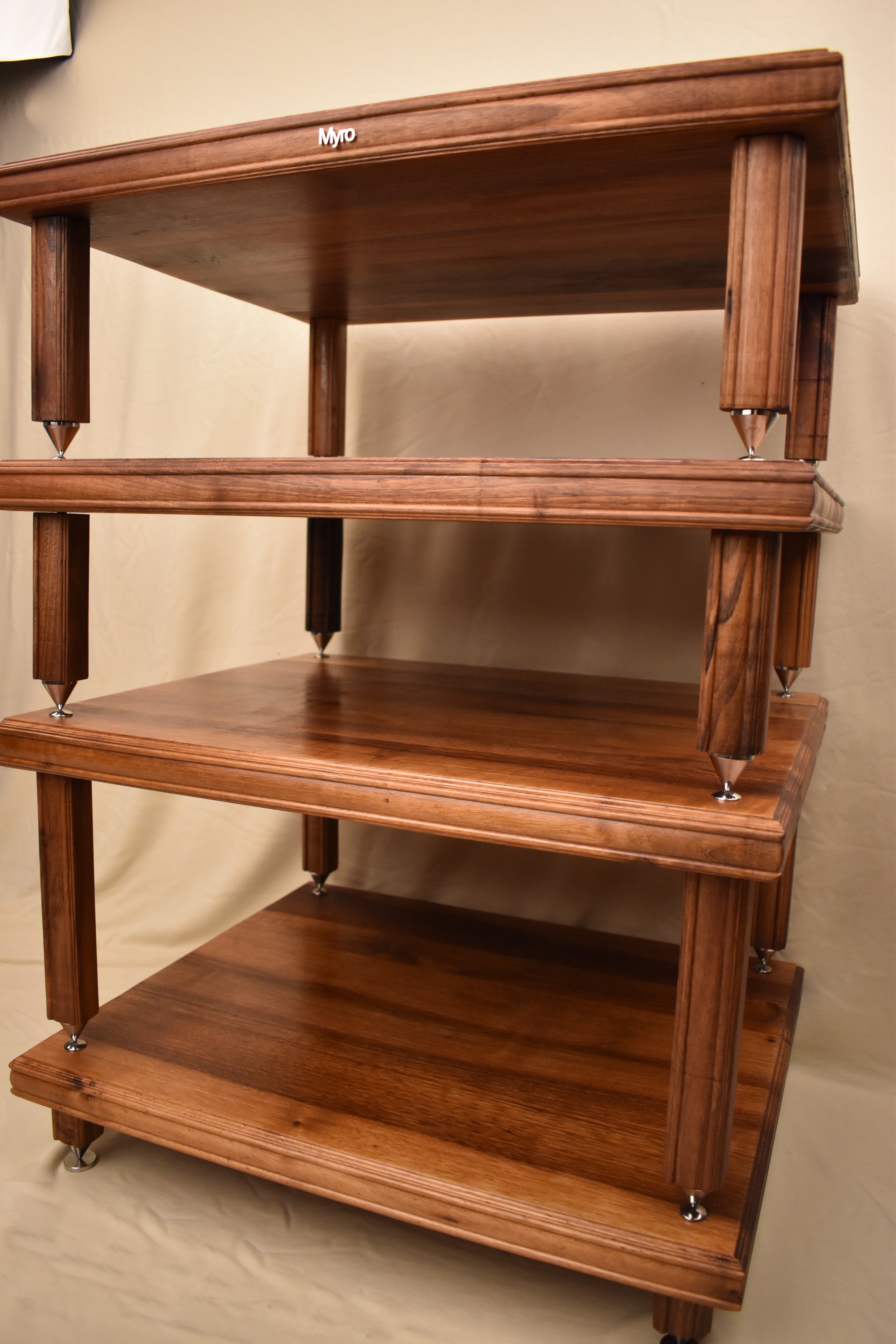
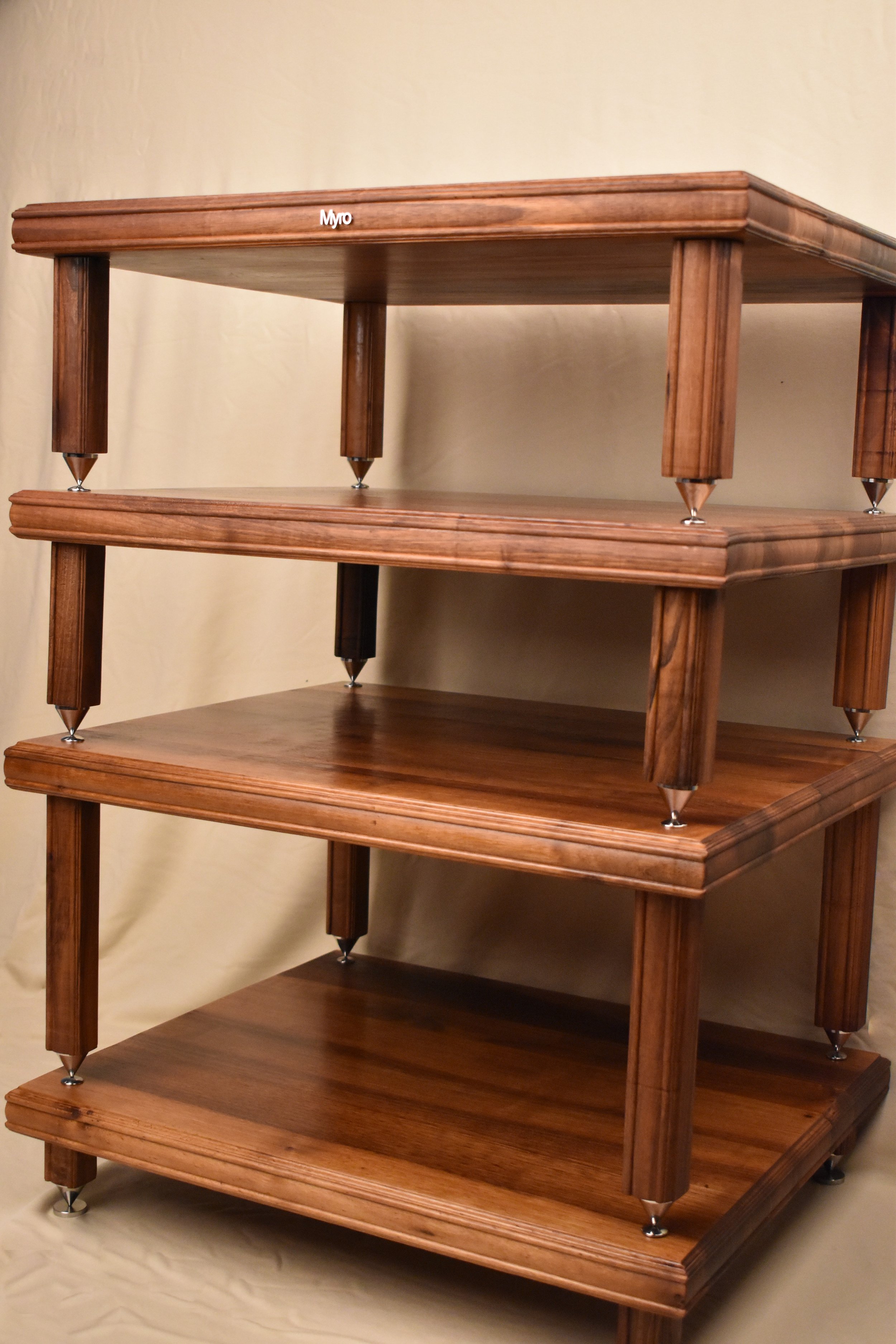
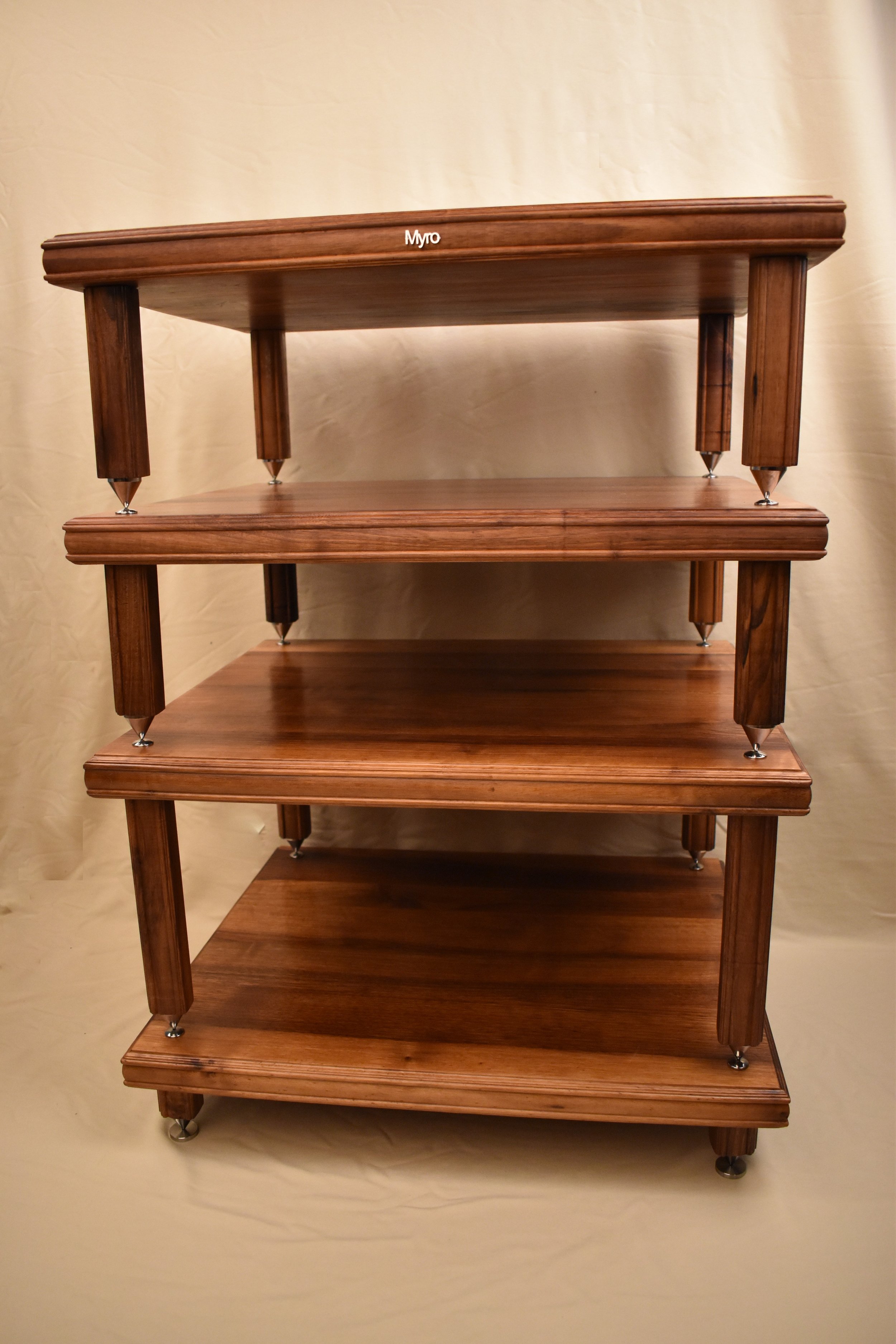
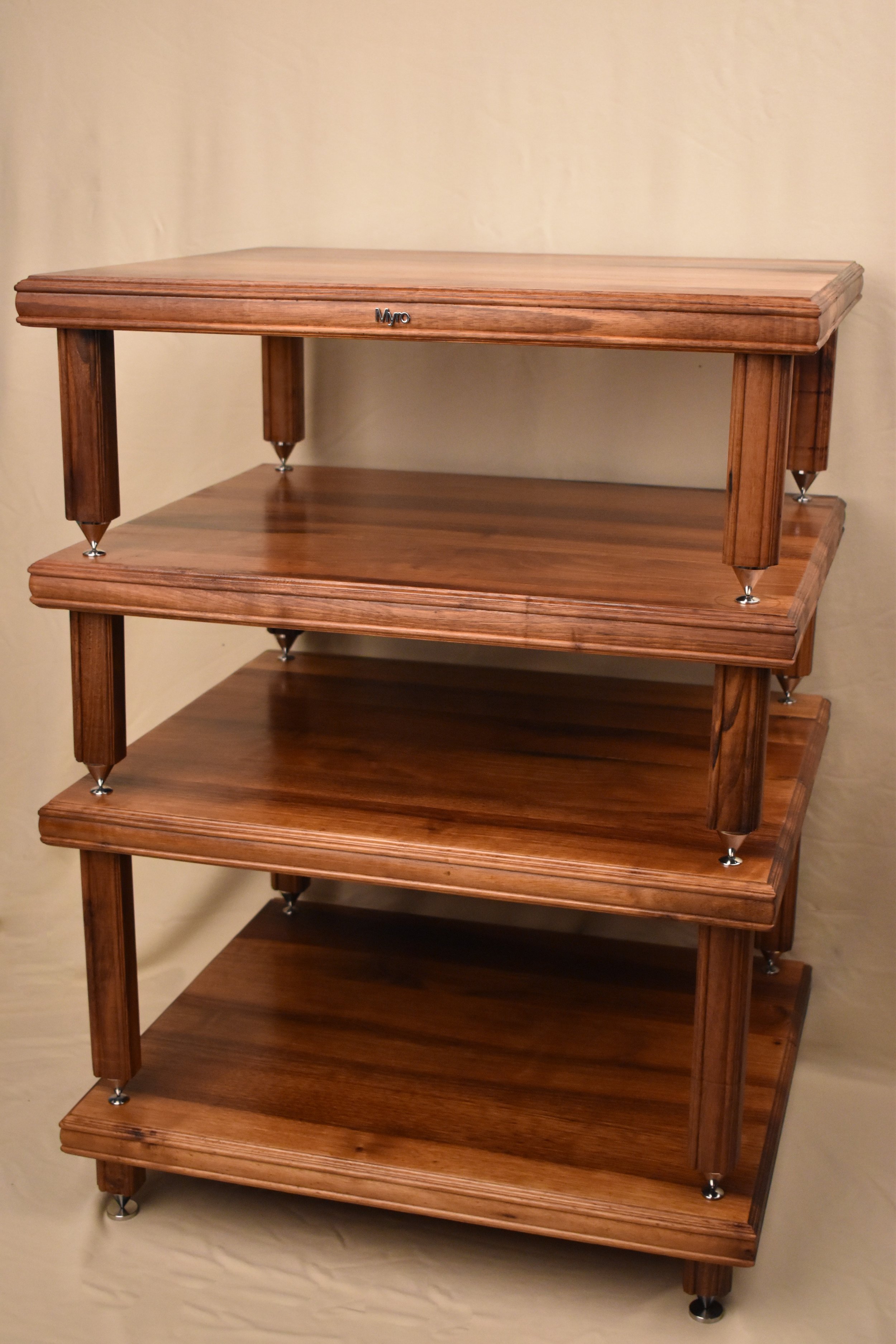
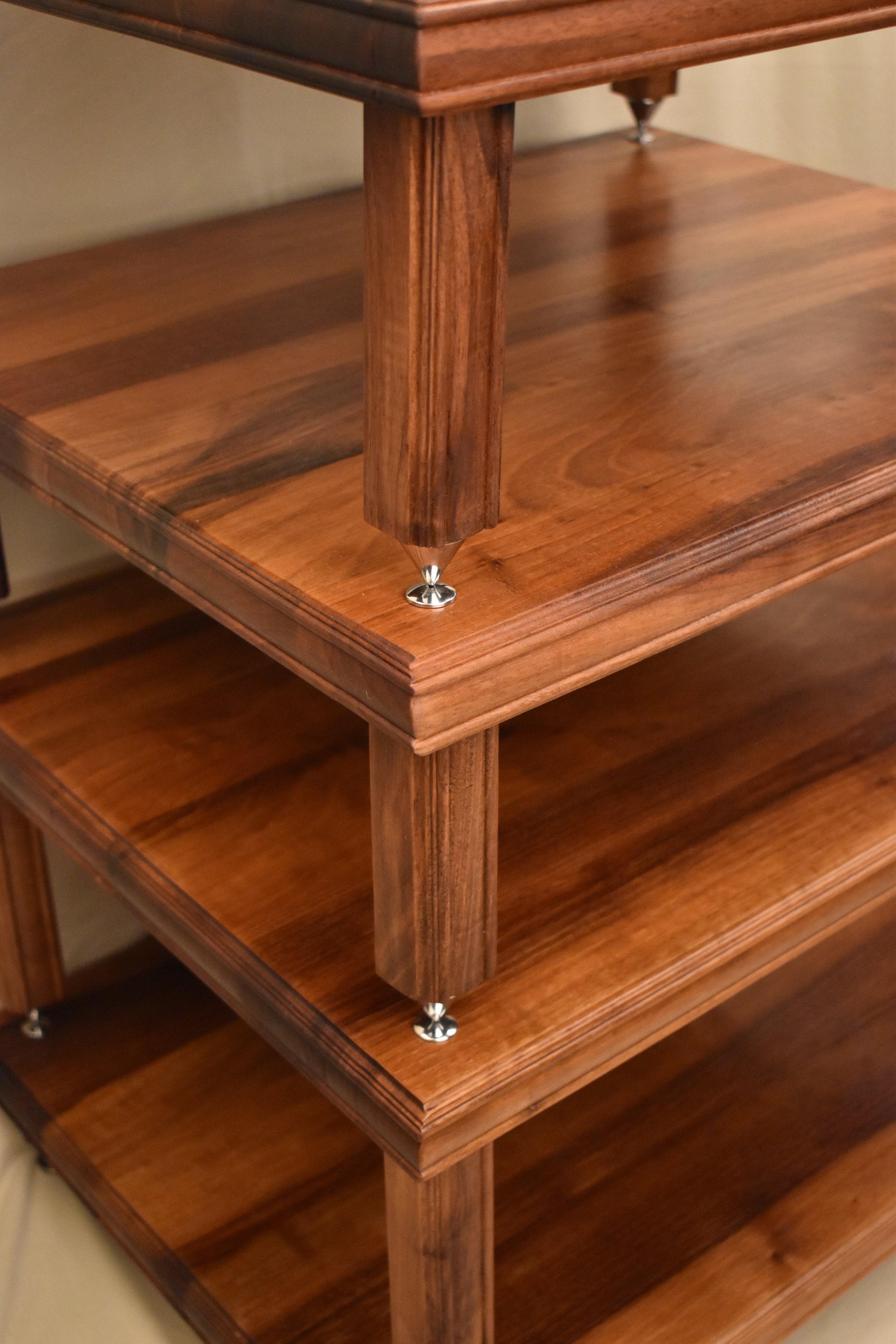
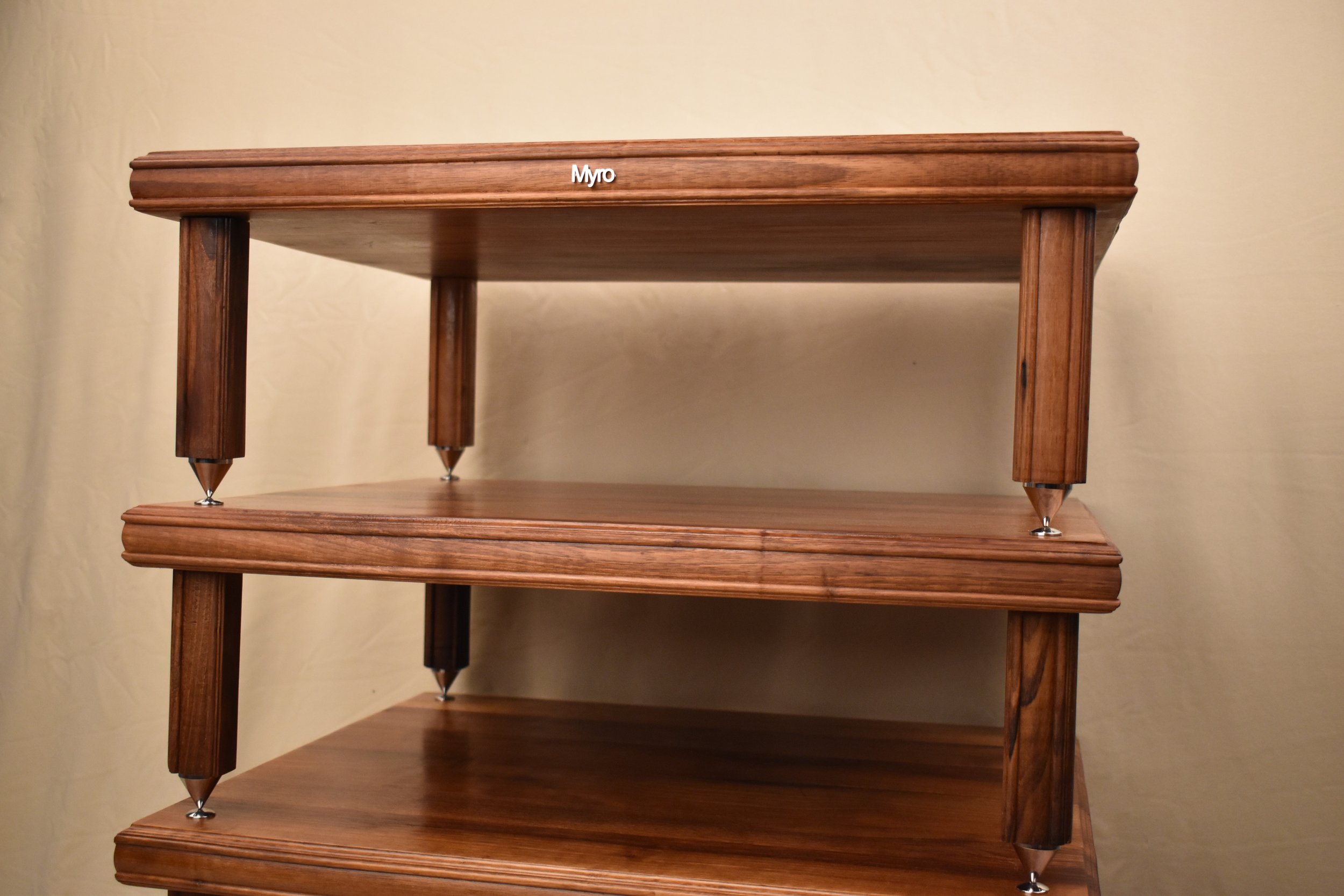
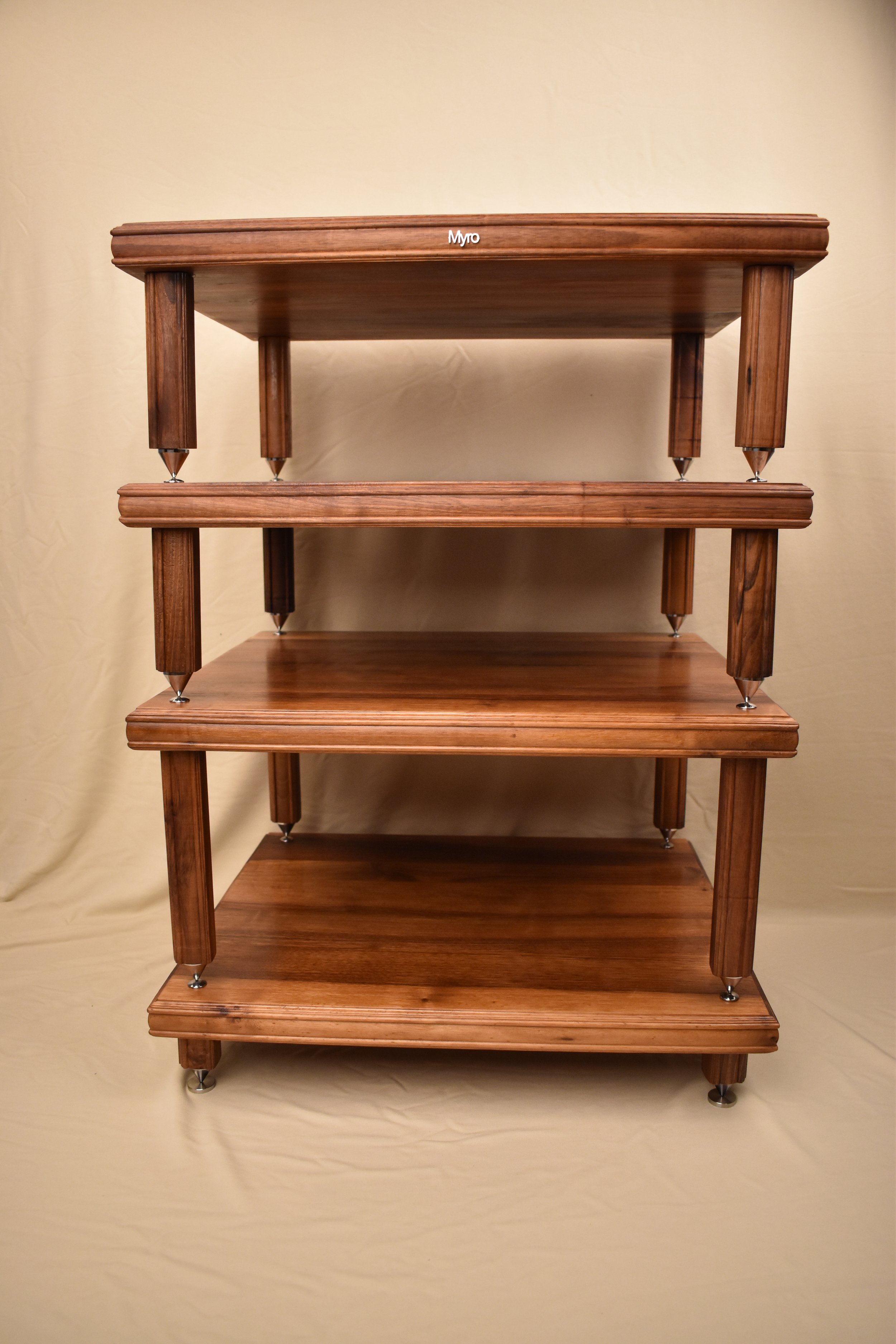
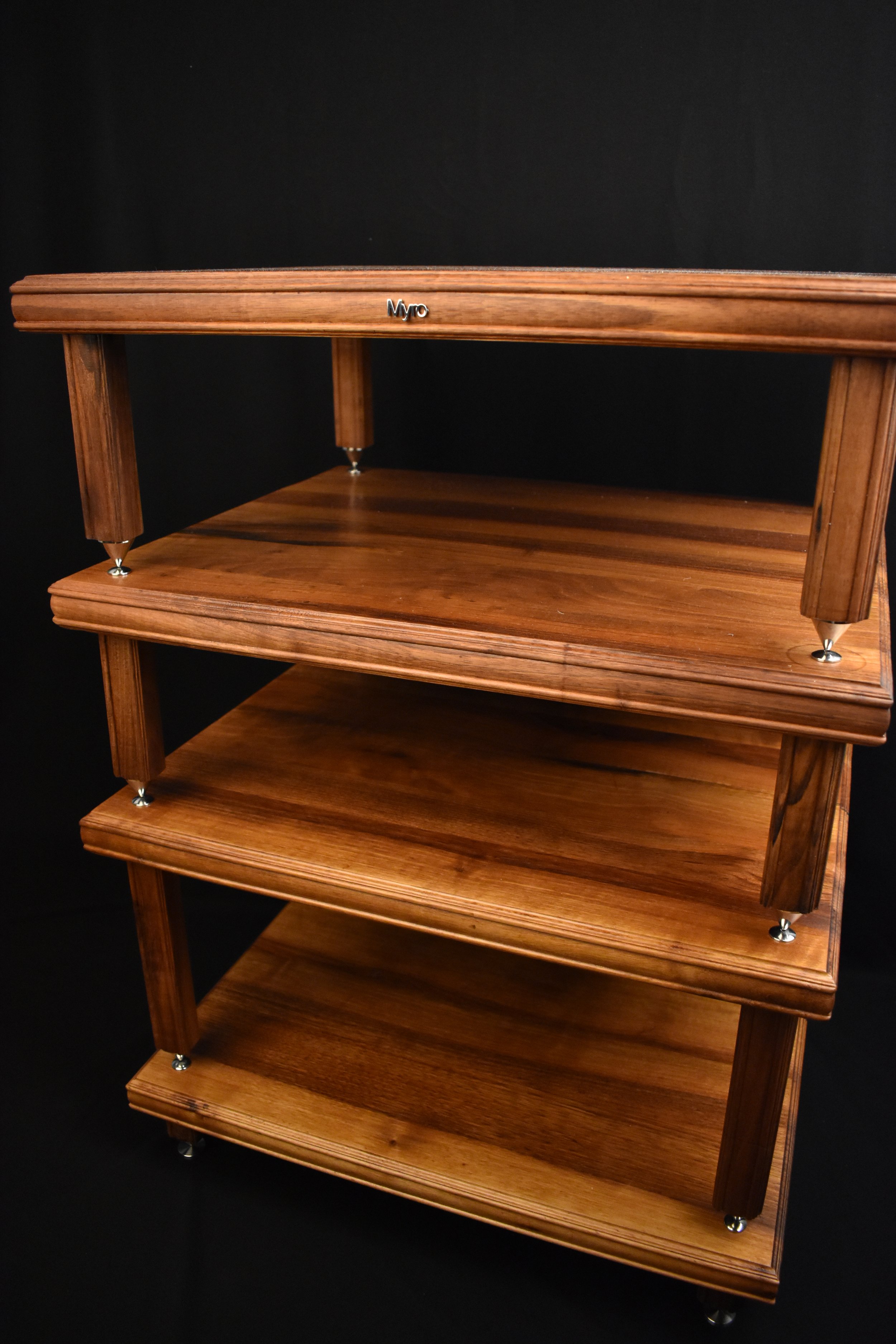
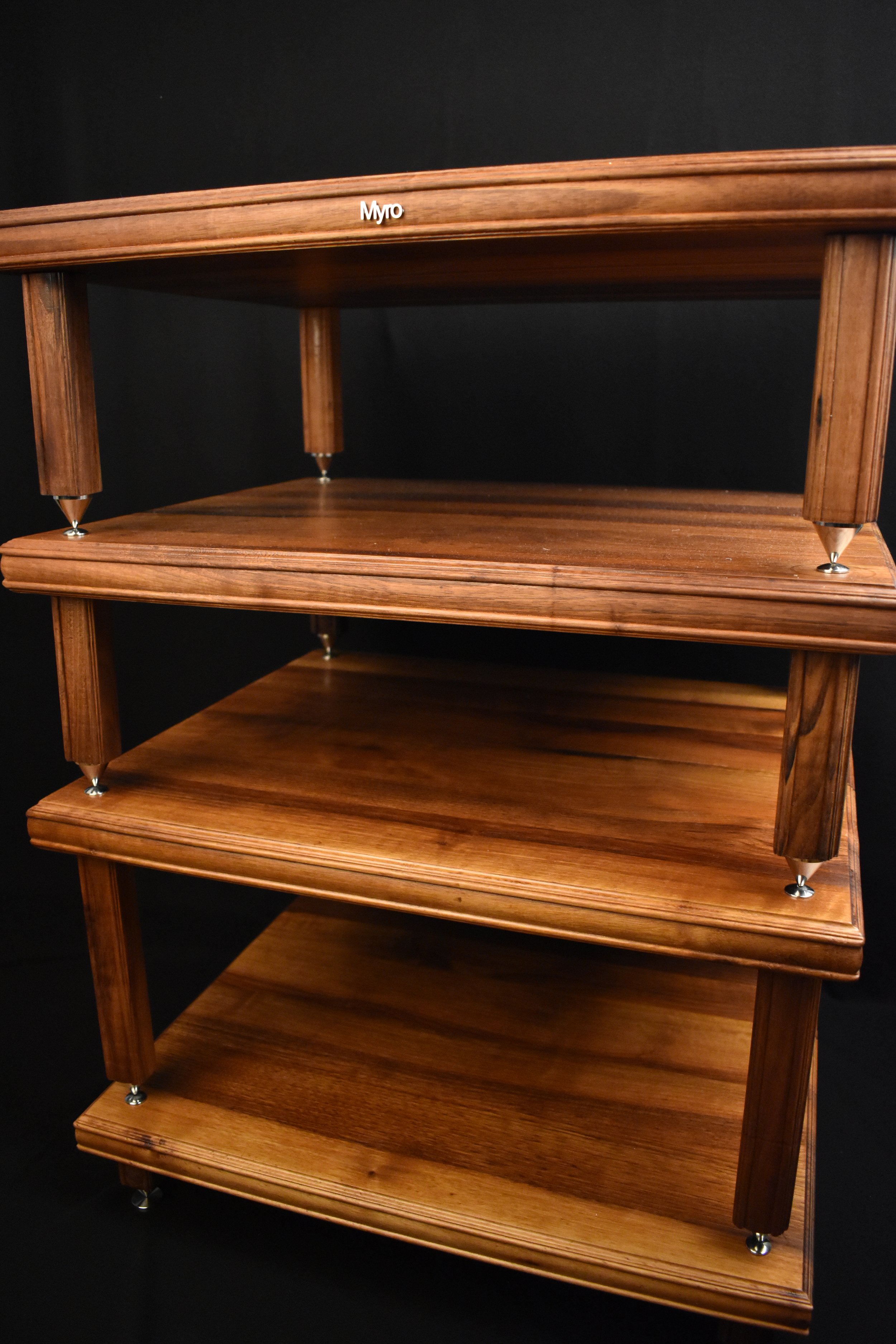
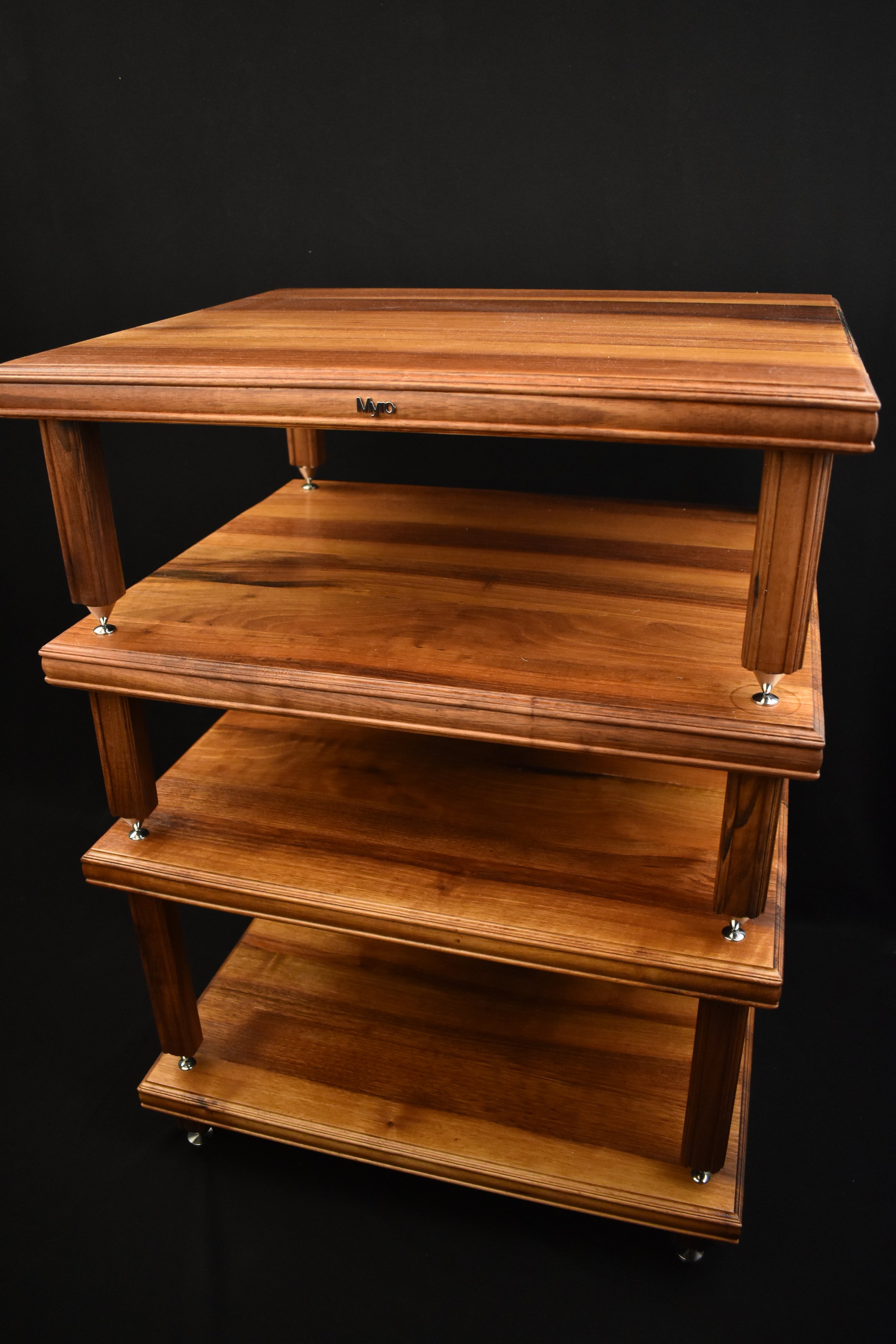
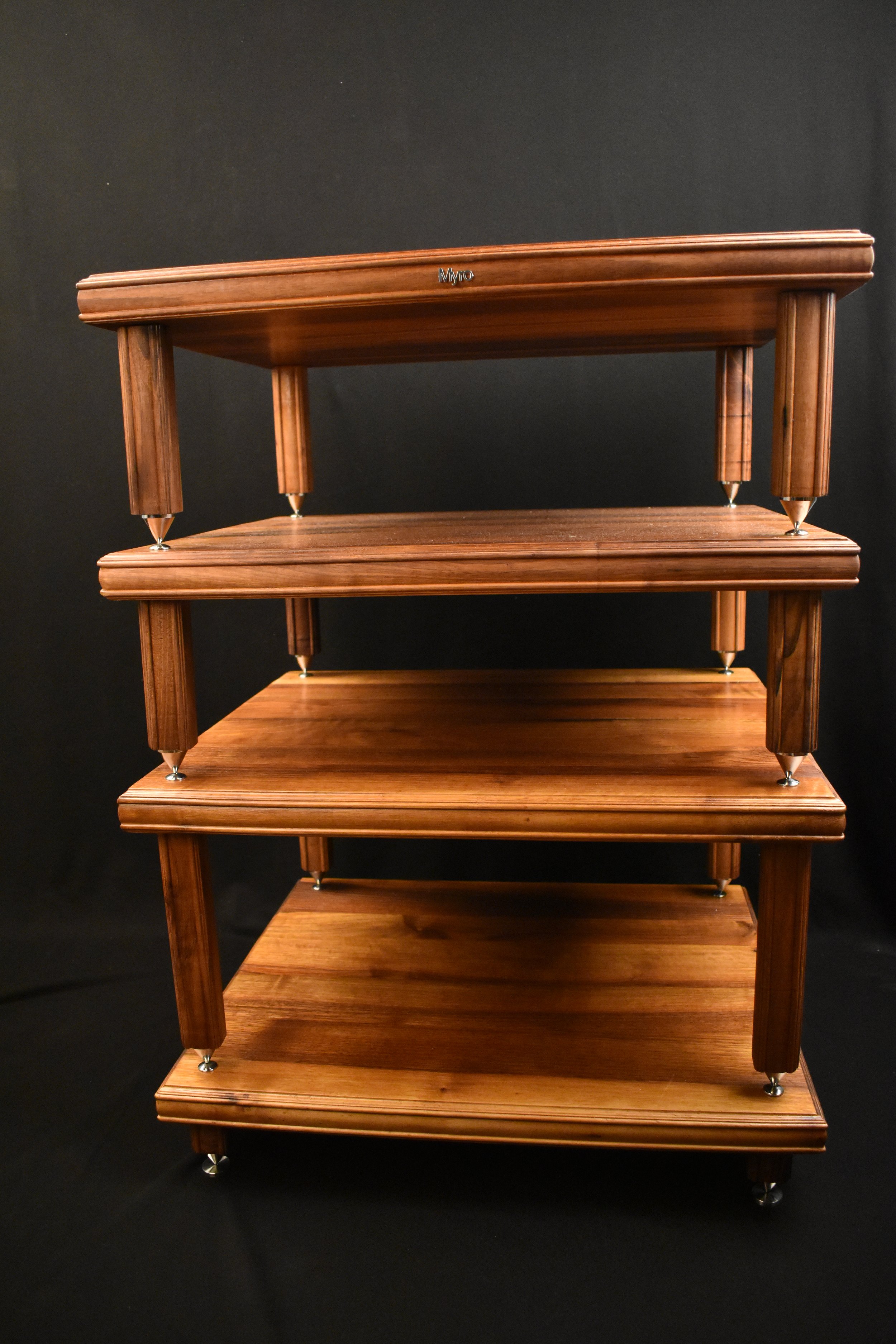
Most hi-fi furniture is built for a modern room — clean lines, straight edges, nothing to clash with. Classic is built for the other kind: a room with real character of its own, curved legs and mouldings already in the furniture around it. Its curved elements are hand-carved and hand-sanded, piece by piece, by Miloš himself — real hand work a straight-edged rack simply doesn't need. Solid-wood, hand-shaped hi-fi furniture for a room like that is genuinely hard to find; that's what Classic exists for, and why it's priced above Reference.
Built from a single piece, not glued up from smaller ones
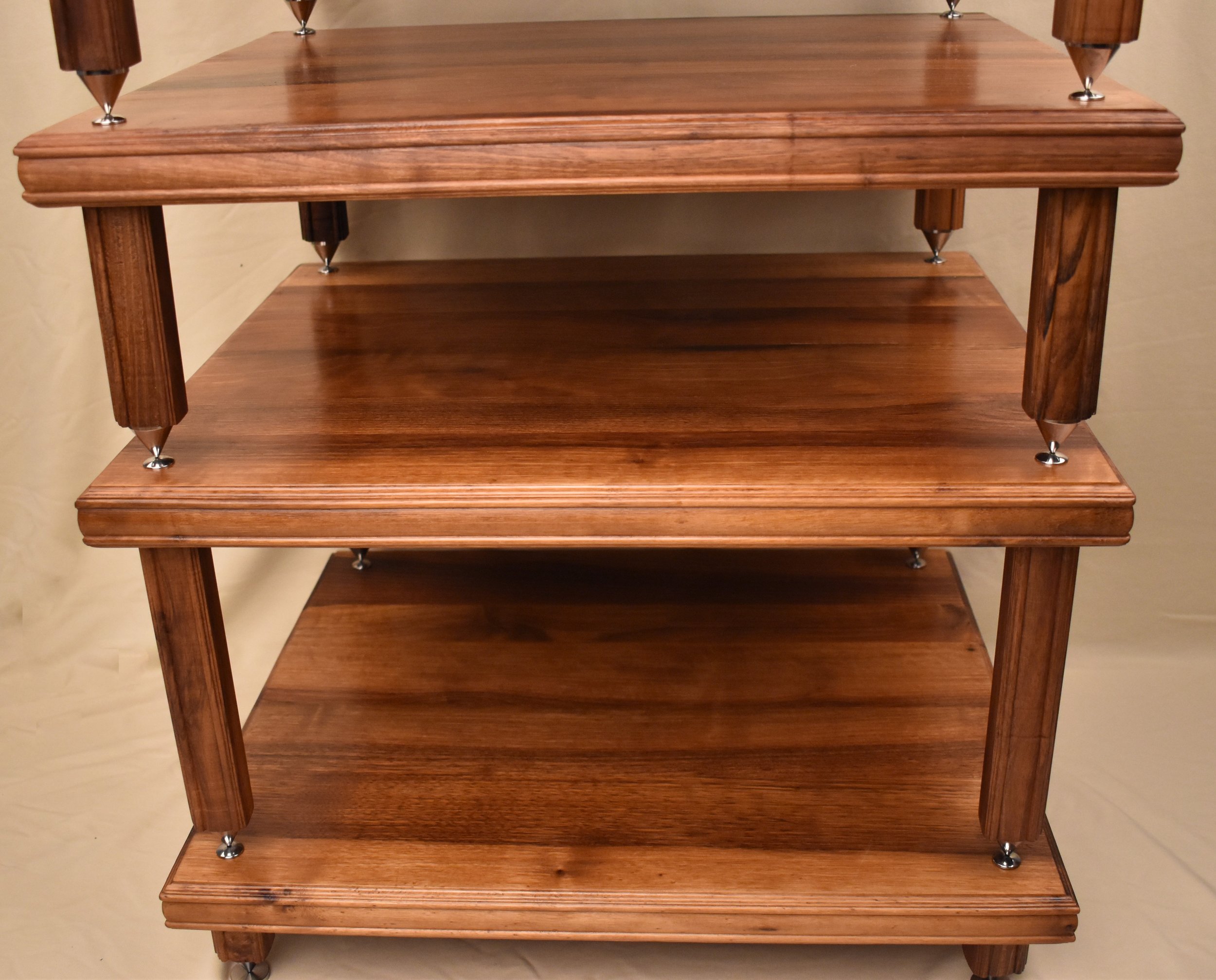
Made with only premium solid walnut or cherry — the same tonal difference the whole Myro range is built around (walnut for a tighter low end and brighter highs, cherry for a balanced, neutral warmth). Every shelf is laminated in depth only, never across its width, so the load-bearing span between the legs is one uninterrupted piece of wood, not a glued joint. The curved profiles, shaped and sanded by hand rather than cut straight. Boards for each rack are chosen from the same piece of timber, so grain and colour match across every tier. Handcrafted start to finish by Miloš, 4th generation of a family that's worked wood for a living.
Why wood, honestly
We won't tell you a wooden rack changes how your amplifier sounds on its own — no material does that by itself. What solid hardwood gives you is real: mass, rigidity, and a structure that absorbs vibration internally rather than ringing the way bare steel, aluminium or glass can. Medium-density fibreboard is often praised for its uniform density, but in the world of high-end audio, uniformity can be a liability. MDF is created by binding wood dust with large amounts of chemical resins and glues. These synthetic binders "choke" the material, preventing it from breathing or dissipating energy effectively. Instead of acting as a sink for vibrations, MDF shelves often act as batteries. They store energy from loud passages and release it back into your equipment milliseconds later. This creates the "muddy bass" problem that many enthusiasts struggle to solve. Hardwoods like oak, walnut, and ash possess a chaotic internal grain structure that is far superior at breaking up standing waves. Walnut is often favored for its ability to provide a tighter low end, while cherry can add a subtle sweetness to the higher frequencies. We utilize 100% solid wood construction to ensure that parasitic vibrations are converted into heat rather than reflected back into your audio components. This isn't just about aesthetics; it's about providing a silent platform where your music can breathe.
Built to hold real systems, not just theoretical ones
Every shelf carries an estimated safe load of ≈100kg — calculated conservatively, from the narrowest shelf depth we offer, with real margin built in. But the number that actually matters is the one we've lived with: we have repeatedly put weighs over 130kg and has on production Reference units, with no sign of stress. That's not a lab estimate.
Built to fit the room, not just the system
1 to 6 tiers in 60×40cm, 60×45cm, 60×50cm, 120×40cm, 120×45, 120×50cm footprints (internal width of 50cm or 53cm per space for 120cm models) any custom length at no extra charge, so the piece sits at the height a Victorian, Baroque, or Art Deco room actually calls for. Built to perform, built to last and to be used by generations.
1 to 6 tiers in 60×40cm, 60×45cm, 60×50cm, 120×40cm, 120×45, 120×50cm footprints (internal width of 50cm or 53cm per space for 120cm models)
4×4cm legs, hand-carved and hand-sanded into their curved profile, any custom length at no extra charge
4 stainless steel spikes (26mm tall, 28mm diameter), isolated from the wood by a 2mm pad
Estimated safe load: ≈100kg per shelf — and every design is proven well beyond that: tested at over 130kg of load per shelf
Ships in 3 weeks for our standard sizes; a fully custom size is built to order in 6–8 weeks
Built for rooms with character, not just systems
Most hi-fi furniture is built for a modern room — clean lines, straight edges, nothing to clash with. Classic is built for the other kind: a room with real character of its own, curved legs and mouldings already in the furniture around it. Its curved elements are hand-carved and hand-sanded, piece by piece, by Miloš himself — real hand work a straight-edged rack simply doesn't need. Solid-wood, hand-shaped hi-fi furniture for a room like that is genuinely hard to find; that's what Classic exists for, and why it's priced above Reference.
Built from a single piece, not glued up from smaller ones
Made with only premium solid walnut or cherry — the same tonal difference the whole Myro range is built around (walnut for a tighter low end and brighter highs, cherry for a balanced, neutral warmth). Every shelf is laminated in depth only, never across its width, so the load-bearing span between the legs is one uninterrupted piece of wood, not a glued joint. The curved profiles, shaped and sanded by hand rather than cut straight. Boards for each rack are chosen from the same piece of timber, so grain and colour match across every tier. Handcrafted start to finish by Miloš, 4th generation of a family that's worked wood for a living.
Why wood, honestly
We won't tell you a wooden rack changes how your amplifier sounds on its own — no material does that by itself. What solid hardwood gives you is real: mass, rigidity, and a structure that absorbs vibration internally rather than ringing the way bare steel, aluminium or glass can. Medium-density fibreboard is often praised for its uniform density, but in the world of high-end audio, uniformity can be a liability. MDF is created by binding wood dust with large amounts of chemical resins and glues. These synthetic binders "choke" the material, preventing it from breathing or dissipating energy effectively. Instead of acting as a sink for vibrations, MDF shelves often act as batteries. They store energy from loud passages and release it back into your equipment milliseconds later. This creates the "muddy bass" problem that many enthusiasts struggle to solve. Hardwoods like oak, walnut, and ash possess a chaotic internal grain structure that is far superior at breaking up standing waves. Walnut is often favored for its ability to provide a tighter low end, while cherry can add a subtle sweetness to the higher frequencies. We utilize 100% solid wood construction to ensure that parasitic vibrations are converted into heat rather than reflected back into your audio components. This isn't just about aesthetics; it's about providing a silent platform where your music can breathe.
Built to hold real systems, not just theoretical ones
Every shelf carries an estimated safe load of ≈100kg — calculated conservatively, from the narrowest shelf depth we offer, with real margin built in. But the number that actually matters is the one we've lived with: we have repeatedly put weighs over 130kg and has on production Reference units, with no sign of stress. That's not a lab estimate.
Built to fit the room, not just the system
1 to 6 tiers in 60×40cm, 60×45cm, 60×50cm, 120×40cm, 120×45, 120×50cm footprints (internal width of 50cm or 53cm per space for 120cm models) any custom length at no extra charge, so the piece sits at the height a Victorian, Baroque, or Art Deco room actually calls for. Built to perform, built to last and to be used by generations.
1 to 6 tiers in 60×40cm, 60×45cm, 60×50cm, 120×40cm, 120×45, 120×50cm footprints (internal width of 50cm or 53cm per space for 120cm models)
4×4cm legs, hand-carved and hand-sanded into their curved profile, any custom length at no extra charge
4 stainless steel spikes (26mm tall, 28mm diameter), isolated from the wood by a 2mm pad
Estimated safe load: ≈100kg per shelf — and every design is proven well beyond that: tested at over 130kg of load per shelf
Ships in 3 weeks for our standard sizes; a fully custom size is built to order in 6–8 weeks