

How to Get Buy-In for New Audio Furniture: A Guide to Harmonizing Performance and Design
What if the most critical component in your signal chain isn't the amplifier or the speakers, but the very surface they rest upon? For many enthusiasts, a high-end system is often throttled by micro-vibrations that blur the soundstage, yet explaining this to a partner can feel like an uphill battle. It's frustrating when a precision-engineered Myro HiFi Rack is dismissed as just another piece of expensive shelving. Learning how to get buy-in for new audio furniture requires a shift in perspective. You aren't just buying a stand; you're investing in a structural instrument that honors both the music and the home.
We understand that interpersonal friction over room aesthetics is a real hurdle in the pursuit of sensory perfection. This guide will help you discover how to justify the investment in premium audio furniture by bridging the gap between technical acoustic necessity and artisanal beauty. You'll learn how to present a vision of a high-performance listening environment that looks like a curated gallery. We will walk through the steps to secure partner approval for a significant furniture upgrade while ensuring a measurable improvement in sound clarity that everyone in the house can appreciate.
Key Takeaways
Frame the conversation around the union of acoustic performance and domestic harmony to transform a technical purchase into a shared lifestyle elevation.
Master the technical argument for isolation, explaining how eliminating micro-vibrations reveals the hidden layers and emotional depth of your favorite recordings.
Discover how to get buy-in for new audio furniture by demonstrating how organic, solid hardwood textures soften industrial gear and complement high-end interior design.
Justify the investment through the lens of longevity and craftsmanship, positioning a premium rack as a permanent instrument rather than a temporary fixture.
Learn how to select between the Reference, Classic, or Minimal Myro HiFi Rack designs to satisfy both the audiophile and the aesthete.
Table of Contents
Navigating the Intersection of Performance and Shared Living Spaces
The Acoustic Argument: Why Isolation is a Functional Necessity
Beyond the Black Box: Elevating Aesthetics with Solid Hardwood
The Investment Case: Longevity and the "Last Rack" Philosophy
Navigating the Intersection of Performance and Shared Living Spaces
For many of us, the listening room is also the heart of the home. It's a place where we host friends, unwind after a long day, and build a life. When I talk about how to get buy-in for new audio furniture, I'm really talking about a delicate alignment. It's the moment where technical performance finds a peaceful coexistence with domestic harmony. We aren't just looking for a place to put gear; we're seeking a way to elevate our lifestyle. This shift requires moving away from a utilitarian mindset. Instead of viewing a rack as a storage unit, we must see it as an artisanal addition to a shared sanctuary.
The emotional weight of bringing specialized equipment into a home is significant. High-end audio gear can often feel industrial or cold, which creates friction in a space meant for comfort. To bridge this gap, we frame the conversation around "lifestyle elevation." We're not just adding more black boxes. We're introducing a foundation that respects the room's visual flow while allowing the music to breathe. If you are interested in how professional spaces are designed to balance aesthetics and purpose, we recommend you visit hildebrands GmbH to learn about their retail design work. This approach changes the dynamic from a compromise to a collective upgrade.
The Shared Sanctuary: Why Aesthetics Matter
Visual clutter is more than just an eyesore. It directly impacts our mental clarity and our ability to immerse ourselves in a recording. A cluttered environment creates a sense of unrest that competes with the music. By choosing a dedicated rack, such as the Minimal Myro HiFi Rack, you define a clear "listening zone." This structure organizes the equipment without dominating the room's personality. It's about choosing materials that resonate with existing decor. Solid hardwoods like walnut or oak provide organic textures that soften the industrial edges of amplifiers and turntables, making the system feel like it belongs.
Reframing the Investment: From "Shelf" to "Instrument"
Calling a high-end rack "furniture" is technically inaccurate. In the world of high-fidelity sound, the rack is a vital component of the signal chain. Think of it like the body of a grand piano or the wood of a fine violin. These structures aren't just holding parts; they're managing resonance. This is deeply tied to the science of sound perception, where even the smallest vibrations can color what we hear. When you're explaining how to get buy-in for new audio furniture, position the rack as the foundation. It protects your investment in electronics by ensuring they perform at their absolute peak, free from the interference of the floor's energy.
The Acoustic Argument: Why Isolation is a Functional Necessity
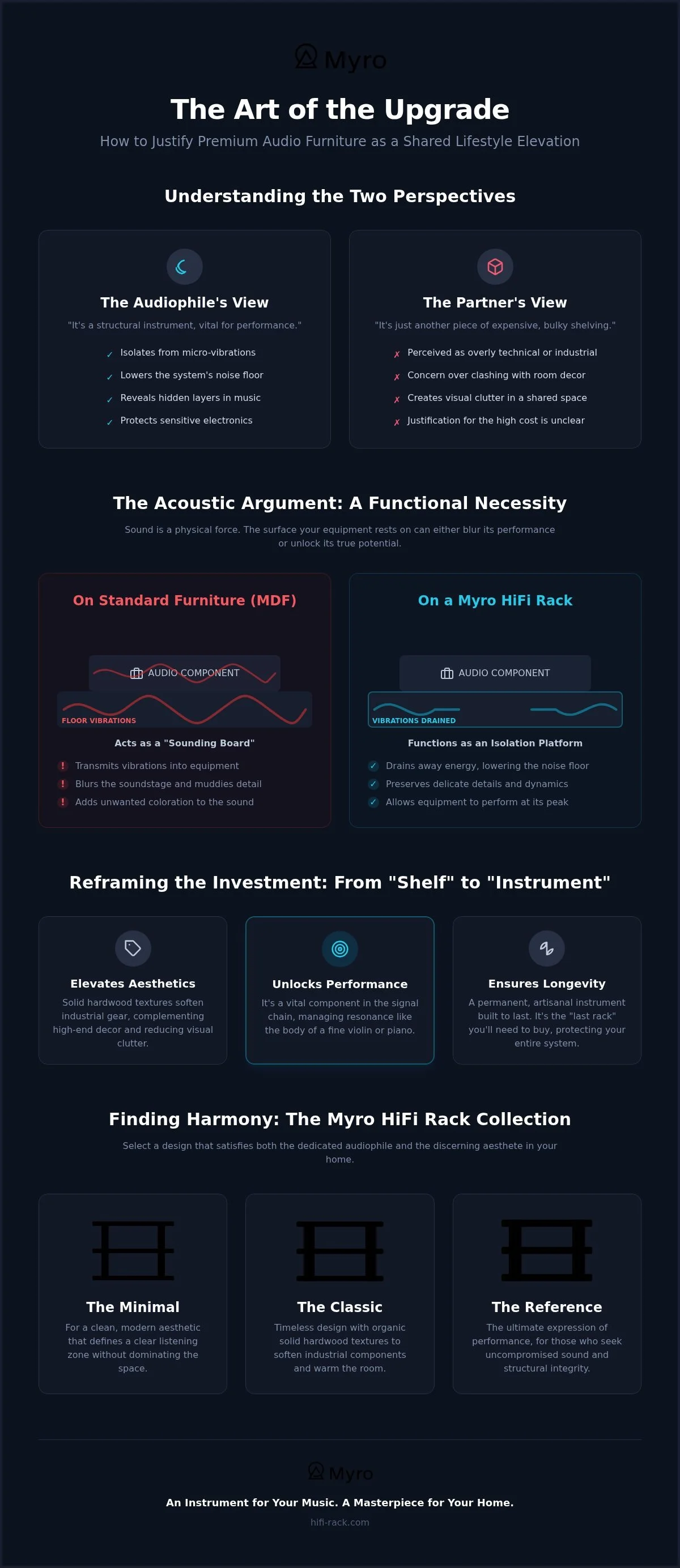
Sound is a physical force. While we often focus on the air moving between the speakers and our ears, the energy moving through the floor and walls is just as significant. High-fidelity components, especially turntables and tube amplifiers, are sensitive to the environment. Standard sideboards or mass-produced MDF furniture lack the structural integrity to manage this energy. Instead of isolating your gear, these pieces often act as sounding boards, vibrating in sympathy with the music and blurring the delicate details of the soundstage. This is the "coloration" that prevents your system from reaching its engineered potential.
A specialized rack is a functional requirement for any serious listener. It lowers the noise floor by draining away micro-vibrations before they can enter the signal chain. Understanding these technical stakes is a vital step in learning how to get buy-in for new audio furniture from those who might initially see it as a luxury. By framing the rack as a performance tool, you move the conversation away from decor and toward the preservation of your electronics. Much like investing in quality furniture for the rest of the home, a premium audio stand is a long-term commitment to excellence and durability.
Resonance Control: The Science of Silence
Mechanical isolation is the art of separating your equipment from the room's physical vibrations. High-end racks utilize mass and specific material densities to absorb unwanted energy. This is particularly critical for analog playback, where a needle must track grooves measured in microns. Any external movement translates directly into audible distortion. Solid wood naturally damps vibrations without the harsh, metallic ringing often associated with glass or steel supports. This organic damping ensures that the only thing you hear is the recording itself, presented with absolute clarity and emotional depth.
Heat Dissipation vs. Dust Management
A common objection to specialized audio racks is the open-architecture design, which some fear invites dust. However, for high-powered amplifiers, airflow is a matter of longevity. Enclosed cabinets trap heat, which can degrade sensitive internal components over time. An open design ensures consistent thermal management, allowing your gear to breathe and operate within its optimal temperature range. The Reference Myro HiFi Rack balances this need for airflow with a refined, structural elegance that complements the home. It's a design that prioritizes the health of your system without sacrificing the visual harmony of your living space. If you are ready to see how these principles come together, you can explore our complete collection of artisanal racks.
Beyond the Black Box: Elevating Aesthetics with Solid Hardwood
High-end audio equipment often carries a distinct industrial weight. Brushed aluminum, glowing vacuum tubes, and heavy heat sinks are marvels of engineering, but they can feel cold and imposing in a living room. When you're considering how to get buy-in for new audio furniture, the aesthetic argument is often your most persuasive tool. You aren't simply adding a storage solution. You're introducing an artisanal piece of art that happens to house your electronics. By choosing solid hardwoods like walnut or oak, you bring organic textures and warmth into the space, softening the technical edge of the gear and creating a more inviting atmosphere.
I believe that furniture should be as soulful as the music it supports. We don't build mass-produced boxes. We create instruments of silence. In a world of disposable interiors, handcrafted furniture stands out as a testament to patience and skill—a standard also seen in the work of The Mensa Table Company. A rack shouldn't be hidden away. It should be a focal point that complements your home's architecture. This shift from "gear storage" to "curated gallery" changes the conversation from a technical necessity to a lifestyle upgrade that everyone in the home can take pride in.
The "No MDF" Promise: Why Material Integrity Matters
Material choice defines the soul of a piece. Many commercial racks rely on MDF or veneer-clad boards, which often feel hollow and look dated within a few years. We've made a definitive promise to use only solid hardwood. There is a tactile honesty in solid wood that you can't replicate with laminates. It carries a sense of weight and permanence that reflects the quality of the components resting upon it. Solid wood doesn't just last; it ages with grace, developing a rich patina that tells the story of your home. Our commitment to sustainable craftsmanship ensures that each piece is built with respect for the natural world, resulting in a family heirloom that outlasts the electronics it holds.
Minimalism and the Slim Profile
Space is often the biggest hurdle in getting buy-in for new upgrades. In smaller rooms, a bulky rack can feel like it's dominating the environment. This is where the Minimal Myro HiFi Rack excels. Its "Slim" approach reduces visual weight while maintaining uncompromising isolation performance. By using a minimalist design language, we ensure the furniture fits the home rather than forcing the home to fit the furniture.
Custom Dimensions: We can tailor heights and widths to nestle into specific alcoves or corners.
Visual Clarity: The open, airy structure prevents the "black box" effect that clutters a room.
Artisanal Finish: Hand-rubbed oils highlight the natural grain, making the rack a beautiful addition to any decor style.
When the design is this deliberate, it stops being about "where to put the HiFi" and starts being about how to enhance the room's overall aesthetic harmony.
The Investment Case: Longevity and the "Last Rack" Philosophy
Conversations about cost are often the most challenging part of how to get buy-in for new audio furniture. It is easy to view a premium rack through the lens of a single transaction. I invite you to shift that perspective toward a framework of longevity. We call this the "Last Rack" philosophy. When you invest in a structural instrument, you are stepping away from the exhausting cycle of disposable consumerism. You aren't just buying a place to put your gear; you are acquiring a permanent foundation for your passion.
Modular Growth: A Future-Proof System
One of the primary fears in any significant upgrade is the risk of outgrowing the solution. A rigid, one-size-fits-all cabinet forces you into expensive replacements when your system expands. Designs like the Myro Classic HiFi Rack solve this through modularity. You can start with a two-tier setup and add levels as your collection of components grows. This flexibility reduces the friction of future upgrades. It ensures that your furniture evolves alongside your journey in sound. For a deeper look at these technical considerations, consult The Ultimate Guide to Choosing a Solid Wood HiFi Rack.
Heirloom Quality vs. Consumer Waste
Choosing solid wood is a stand against the environmental and financial waste of "fast furniture." MDF and veneers are difficult to repair once they are chipped or water-damaged. Solid hardwood is different. It is a living material that can be refinished, repaired, and passed down through generations. Each piece we create is born from a multi-generational woodworking tradition that values the integrity of the grain as much as the precision of the joint. This commitment to craftsmanship ensures that your rack will never end up in a landfill. It remains a beautiful, functional part of your family's story for years to come.
Ready to invest in a foundation that lasts a lifetime? Explore our complete collection of artisanal racks to find the right fit for your home.
Finding Harmony with the HiFi Rack Collection
Achieving domestic harmony is about more than just sound. It is about finding the right structural balance that respects both your passion and your home. When you are finalizing how to get buy-in for new audio furniture, it helps to match the specific model to the unique needs of your living space. Each collection we craft is designed to solve a different set of challenges, from technical performance hurdles to aesthetic and spatial constraints. By selecting a piece that speaks to the shared values of the household, the rack becomes a celebrated addition rather than a point of contention.
Our collections are built on the promise of material integrity and sensory perfection. Whether you are looking for a statement piece or a subtle foundation, there is a path that leads to a shared victory. We believe that when the furniture is as beautiful as the music, the entire experience of the home is elevated. This is the final step in bridging the gap between the audiophile's requirements and the partner's vision for a curated sanctuary.
Choosing Your Path to Buy-In
Every home has its own rhythm, and every listener has a different priority. To find the right fit, consider which of these hurdles is the most significant in your household:
The Performance Argument: For the listener who demands absolute silence and isolation, the Reference Myro HiFi Rack offers a no-compromise solution. It is the ultimate expression of our technical expertise.
The Timelessness Argument: The Classic Myro HiFi Rack is for those who value tradition and modularity. Its flexible design grows with your system, making it a sustainable choice for a lifetime of listening.
The Space-Saving Argument: If footprint and visual weight are the primary concerns, the Minimal Myro HiFi Rack provides high-performance isolation in a slim, understated profile that fits smaller rooms with ease.
I encourage you to explore our shop together. Visual inspiration is often the quickest way to turn a technical discussion into an exciting design project.
Next Steps: The Consultation
The most effective way to secure buy-in is to involve your partner in the creative process. Choosing the wood species—whether it be the deep warmth of walnut or the light, modern grain of oak—allows the furniture to feel like a collaborative choice. We also offer bespoke dimensions for unique layouts. If you have a specific alcove or a challenging corner, we can tailor the heights and widths to ensure the rack integrates seamlessly into your environment. This level of customization ensures that the final piece is a perfect fit for both your gear and your lifestyle. Craft your sanctuary with HiFi Rack and begin the journey toward a home that sounds as beautiful as it looks.
Elevating Your Shared Sanctuary
The journey to a perfect listening environment doesn't have to be a solitary one. By reframing the conversation from a simple purchase to the acquisition of a structural instrument, you invite your partner to appreciate the union of sound and design. We've explored how technical isolation reveals the hidden layers of your music, and how artisanal hardwood textures transform a cold equipment stack into a warm, inviting focal point. Learning how to get buy-in for new audio furniture is ultimately about sharing a vision of a more beautiful, musical home.
Each piece we create is handcrafted in Serbia, drawing on multi-generational woodworking expertise to ensure a lifetime of excellence. Our zero MDF and veneer policy stands as a definitive promise of acoustic integrity. With worldwide shipping available for our bespoke audiophile solutions, your path to sensory perfection is clear. It's time to build a foundation that honors both your passion and your home sanctuary. You've curated your sound; now, give it the home it deserves.
Explore the HiFi Rack Collection and Find Your Perfect Match
Frequently Asked Questions
Do I really need a dedicated audio rack for my system?
Yes, because standard furniture lacks the structural rigidity and isolation properties required to manage mechanical resonance. A dedicated rack acts as a foundation that drains vibrations away from sensitive circuitry. This prevents the blurring of micro-details in your music. Without it, your high-fidelity components are limited by the physical energy of the room and the floor.
How do I explain the cost of a HiFi rack to my spouse?
Frame the cost as a long-term investment in a functional instrument rather than a piece of decorative shelving. Explain that learning how to get buy-in for new audio furniture involves highlighting the rack's role in protecting expensive electronics from heat and vibration. Emphasize that a solid hardwood piece is an heirloom that retains its value and aesthetic appeal for decades.
Is solid wood better than metal for audio isolation?
Solid wood is often preferred because it naturally damps vibrations without the high-frequency ringing associated with metal or glass. While metal racks use mass to stay stable, they can sometimes transmit energy back into the components. Solid hardwood offers a unique combination of structural rigidity and organic damping. This results in a warmer, more natural soundstage for your listening room.
What is the "Wife Acceptance Factor" in the audiophile world?
WAF is a common industry term describing the balance between high-performance audio gear and the aesthetic requirements of a shared living space. It acknowledges that many audiophile solutions are industrial or imposing. Our goal is to replace this friction with harmony. We offer artisanal furniture that looks like a curated gallery piece while maintaining technical excellence for the most demanding listener.
Can I use a regular sideboard instead of a HiFi rack?
A regular sideboard is typically insufficient because it lacks the necessary airflow and resonance control. Most sideboards use MDF or veneers that vibrate in sympathy with your speakers, which colors the sound negatively. A dedicated rack ensures your components operate at their engineered potential. It provides a stable, non-resonant platform and the proper thermal management your electronics require to thrive.
How does a HiFi rack improve the sound of my turntable?
A HiFi rack improves turntable performance by providing mechanical isolation from floor-borne and air-borne vibrations. Since a turntable's needle reads grooves measured in microns, even the slightest movement can cause distortion. A stable, solid wood rack lowers the noise floor. This allows you to hear deeper into the recording with greater clarity, precision, and emotional impact.
Are open-architecture racks better than closed cabinets for tube amps?
Open-architecture racks are essential for tube amplifiers because they allow for passive heat dissipation. Vacuum tubes generate significant thermal energy that can damage internal components if trapped in a closed cabinet. An open design ensures consistent airflow. This extends the life of your gear and maintains stable performance during your longest and most intimate listening sessions.
How do I choose between the Reference and Classic Myro racks?
Your choice depends on whether you prioritize absolute technical performance or timeless modularity. The Reference Myro HiFi Rack is our no-compromise solution for the most demanding systems. The Classic Myro HiFi Rack offers a flexible, modular design that allows you to add tiers as your collection grows. Both provide the artisanal beauty necessary when considering how to get buy-in for new audio furniture.