

HiFi Rack Vibration Isolation: The Audiophile’s Guide to Resonance Control
What if the most significant upgrade to your audio system isn't a new amplifier or a pair of cables, but the very ground beneath your equipment? You've likely spent years meticulously curating your gear, yet that elusive, silent background remains just out of reach because of microscopic tremors. We understand the frustration of muddy bass response and the loss of soundstage clarity that occurs when your furniture fails to protect your components. This is where hifi rack vibration isolation becomes a vital instrument in your pursuit of sensory perfection.
True isolation is not about simply absorbing sound; it's about managing energy through material integrity and structural rigidity. You deserve a setup where your turntable never skips and your low-end frequencies feel tight and defined. In this guide, you'll discover how precision-engineered vibration isolation transforms your listening experience from mere sound into a pure, immersive sanctuary. We'll explore how artisanal designs like our Reference Myro HiFi Rack bridge the gap between high-end engineering and organic beauty, giving you the blacker background your music deserves.
Key Takeaways
Understand the mechanical separation of audio components from kinetic energy to eliminate muddy bass and restore soundstage clarity.
Learn how to balance soft damping materials with hard-point decoupling to effectively manage energy transfer throughout your signal chain.
Discover why solid hardwood outperforms MDF in hifi rack vibration isolation by using its natural grain to break up destructive standing waves.
Master the "Brain and Brawn" philosophy of component placement and the non-negotiable role of perfect leveling for analog sources.
Explore the uncompromising craftsmanship of the Reference Myro HiFi Rack, designed to elevate your equipment into a pure, immersive sanctuary.
Table of Contents
What is HiFi Rack Vibration Isolation and Why Does It Matter?
Decoupling vs. Damping: Choosing the Right Acoustic Strategy
Beyond MDF: The Superiority of Solid Hardwood in Resonance Control
Optimising Your Setup: Leveling, Spikes, and Component Placement
The Myro Philosophy: Reference-Grade Isolation for the Devoted Listener
What is HiFi Rack Vibration Isolation and Why Does It Matter?
In the pursuit of sensory perfection, we often focus on the visible instruments of our craft. We curate amplifiers, speakers, and cables with meticulous care. However, the invisible forces at play beneath these components are just as critical to the final performance. At its core, vibration isolation is the mechanical separation of audio components from external and internal kinetic energy. When we explore What is HiFi Rack Vibration Isolation, we're really discussing the preservation of a signal's purity. Without a stable foundation, your system is vulnerable to a constant barrage of energy that blurs the lines of your favorite recordings.
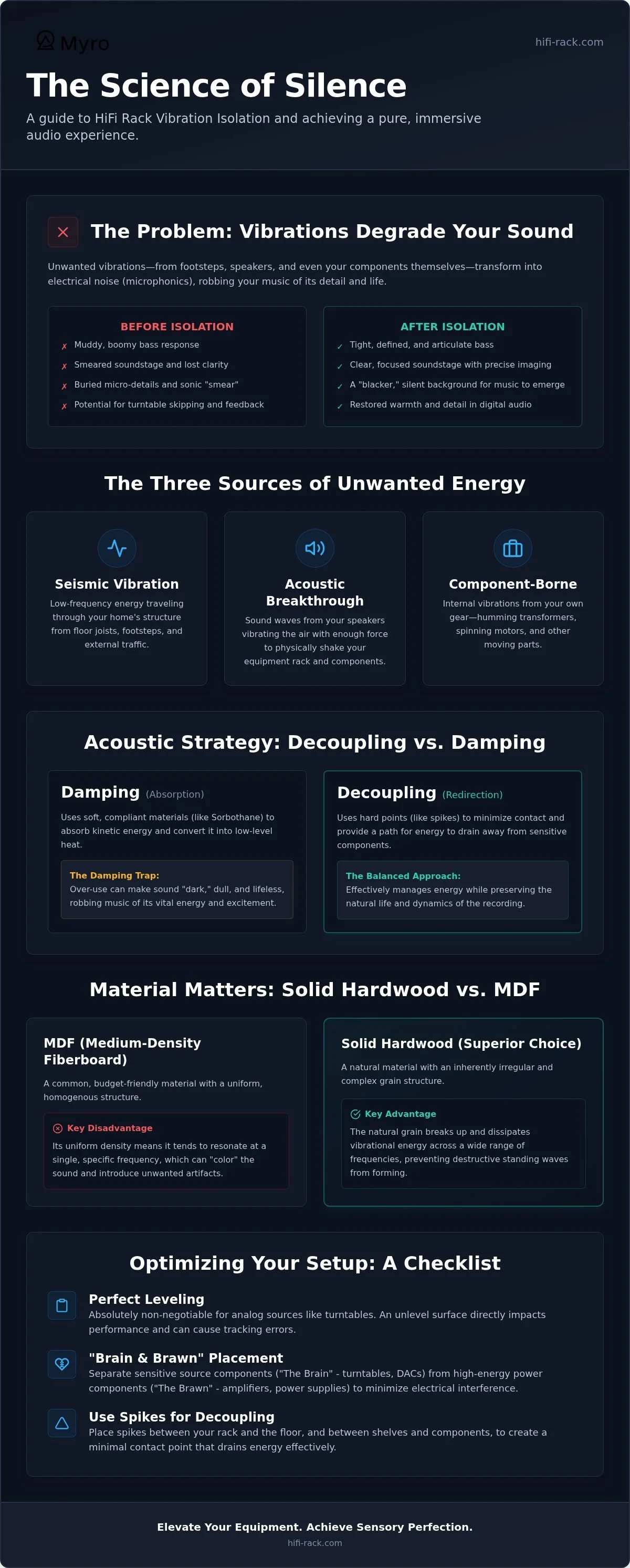
When vibrations enter your signal chain, they don't remain as simple physical movement. They transform into electrical noise. This phenomenon, known as microphonics, occurs when internal parts like capacitors or circuit boards translate mechanical shaking into unwanted interference. The result is a perceptible loss of focus. You'll notice a smeared soundstage where instruments lose their distinct placement; the bass becomes loose and boomy, lacking the tight definition of a live performance. Effective hifi rack vibration isolation ensures that these delicate micro-details aren't buried under a floor of mechanical noise.
The Three Sources of Unwanted Energy
Energy reaches your equipment from three distinct directions, each requiring a thoughtful management strategy. Seismic vibration is the low-frequency energy traveling through your home's structure, often felt in rooms with wooden floor joists. Acoustic breakthrough occurs when your speakers move the air with such force that the sound waves vibrate the rack itself. Finally, component-borne vibration is generated within your own gear. Even the finest electronics contain humming transformers or spinning motors that create internal chaos. A high-quality rack acts as a sanctuary, grounding this energy before it can degrade the sound.
The Impact on Different Components
Not every piece of gear reacts to resonance in the same way, but all are affected. Turntables are notoriously sensitive. Since they rely on a stylus reading microscopic grooves, even a slight floor tremor can cause feedback or muddy the low-end frequencies. Tube amplifiers are also highly susceptible; their internal structures can act like tiny microphones, creating a "ringing" effect that colors the music. Even digital sources face challenges. Mechanical stress can lead to timing errors, or jitter, which strips away the natural warmth and clarity of high-resolution audio. By managing these forces, you restore the silence that allows your music to breathe.
Decoupling vs. Damping: Choosing the Right Acoustic Strategy
Selecting the right method for energy management is a defining moment for any enthusiast. We often view vibration as a singular enemy, but the way we choose to confront it determines the final character of our system. The debate between Decoupling vs. Damping represents two distinct philosophies in the pursuit of sonic purity. While both aim to silence noise, they achieve this through vastly different mechanical pathways. Understanding this distinction is fundamental to effective hifi rack vibration isolation.
Damping relies on the use of soft, compliant materials such as Sorbothane or specialized elastomers to absorb kinetic energy. These materials convert mechanical vibration into low-level heat, effectively "soaking up" the resonance before it can reach your electronics. However, many listeners fall into the "damping trap" by over-using these materials. When a system is over-damped, it often loses its vital energy. The sound becomes "dark" and lifeless; the leading edge of a snare hit or the shimmer of a cymbal feels rounded and dull. We believe in a more balanced approach that respects the natural life of the recording.
Decoupling takes the opposite path. Instead of absorbing energy, it uses hard-point contact, such as precision-machined spikes, to minimize the surface area of energy transfer. This creates a "mechanical diode" effect, allowing energy to exit the component and drain into the floor without reflecting back into the signal path. Hard-point isolation is essential for preserving the musical "snap" and transient speed that makes a performance feel real. It keeps the background black without sacrificing the dynamic contrast that brings music to life.
When to Use Damping
Damping is most effective for high-mass components that generate significant internal vibration, such as large power amplifiers with heavy transformers. It also serves a practical purpose for very lightweight components that might otherwise "skate" on hard spikes. In modern rack design, we often see constrained layer damping, where a thin layer of energy-absorbing material is sandwiched between rigid layers. This hybrid approach offers the benefits of absorption without the sonic penalties of a purely "soft" setup.
The Power of Decoupling
Decoupling remains the gold standard for maintaining clarity and timing. By using spikes and floor protectors, you ensure that energy moves in a single direction. This is particularly beneficial for shelves made of solid wood or glass, where hard-point mounting prevents the shelf itself from acting as a resonator. It allows the component to sit in a state of quiet confidence, free from the blurring effects of stored energy. If you are looking to refine your own setup, exploring precision-engineered furniture can provide the structural integrity needed for true decoupling.
Beyond MDF: The Superiority of Solid Hardwood in Resonance Control
Medium Density Fibreboard (MDF) is often the default choice for mass-produced furniture, yet it rarely meets the demands of a high-fidelity system. From a technical standpoint, MDF is an isotropic material; its uniform density means it lacks a natural way to interrupt the flow of kinetic energy. Instead of dissipating vibrations, MDF tends to trap and store them, eventually releasing that energy back into your components at audible frequencies. This stored resonance is the silent killer of micro-detail. We believe that true hifi rack vibration isolation begins with the biological complexity and structural integrity of solid hardwood.
Unlike synthetic boards, solid hardwood possesses a natural, non-uniform grain structure. Every growth ring and fiber acts as a physical barrier that breaks up standing waves and prevents the buildup of harmonic distortion. This organic irregularity is precisely what allows the music to sound more natural and less mechanical. For those interested in the deeper science behind these material choices, our guide on the myths and realities of hardwood audio furniture explores these technical nuances in greater detail.
Acoustic Properties of Premium Hardwoods
We select our timber based on specific density and Janka hardness ratings. Varieties like walnut, cherry, and oak aren't chosen just for their visual elegance; they're vital acoustic instruments. These woods offer a unique form of natural damping. Because wood is a cellular material, it converts mechanical energy into microscopic amounts of heat through internal friction. This process allows the rack to "breathe" away the resonance, resulting in a blacker background and a more intimate connection to the artist's intent.
The Problem with Mass-Produced Veneers
Many high-end looking racks are actually thin veneers glued over low-quality cores. This construction creates a significant problem: boundary reflections. Every layer of synthetic glue acts as a reflective surface for vibrations, bouncing energy back toward your sensitive equipment. This is why we adhere to a strict "No-Veneer" rule. The Myro Philosophy is built on structural integrity that goes all the way through the shelf.
By rejecting synthetic binders and mass-production shortcuts, we embrace an artisanal approach rooted in Novi Sad craftsmanship. We use raw, high-quality materials that have been seasoned to last a lifetime. When your gear sits on solid timber, you aren't just placing it on furniture. You're integrating it into a system designed to manage energy with the same reverence you have for the music itself. This commitment to material purity ensures that your sanctuary remains untainted by the resonant "honk" of industrial composites.
Optimising Your Setup: Leveling, Spikes, and Component Placement
Setting up a high-performance system is a ritual that requires patience and a master craftsman's eye for detail. Even the most advanced hifi rack vibration isolation cannot reach its full potential if the foundation is flawed. We see the rack not just as furniture, but as a vital instrument that demands precise calibration. When you bring your equipment into your personal sanctuary, the way you position each piece determines whether you hear the music or the mechanical noise of the room.
Perfect leveling is non-negotiable for analog sources and sensitive transports. A turntable stylus tracking at less than two grams relies on a perfectly level plane to maintain channel balance and prevent tracking errors. If the shelf is tilted, the internal suspension of your gear works harder, creating unnecessary tension that clouds the sound. We recommend using a high-quality spirit level on the shelf itself rather than the component chassis to ensure the structural base is true.
The Five-Step Leveling Process
To achieve a stable foundation, start at the very bottom. Ensure the bottom tier is plumb to the floor before adding additional shelves. Adjust the precision-machined spikes slowly, ensuring each one carries an equal share of the weight. If one spike is "floating," the entire rack will resonate like a tuning fork. Once the frame is solid, check the level of each shelf individually. Finally, place your components and perform a secondary check; the weight of a heavy power amplifier can subtly shift the balance of the timber.
Organising Your "Brain" and "Brawn"
We advocate for the "Brain and Brawn" philosophy of component layout. Your system's "Brawn" consists of power amplifiers and power supplies. These units contain heavy transformers that generate both electromagnetic fields and physical hum. Keep these on the lower shelves, closest to the floor, where their energy can drain away most effectively. Your "Brain" components, such as phono stages and pre-amplifiers, are incredibly sensitive to interference. Place these on the upper tiers, away from the power units.
Maintain an "air gap" between shelves to allow for heat dissipation and to prevent energy from jumping between components. If you're ready to implement this strategy with a rack designed for this level of precision, the Reference Myro HiFi Rack provides the ideal architecture for sophisticated component separation.
Finally, pay attention to your cables. If they are bunched together or resting heavily against the rack, they act as "vibration bridges," carrying kinetic energy directly into your signal path. Use floor protectors on hard surfaces to maintain the mechanical diode effect of your spikes without damaging your listening room. By following these steps, you transform a collection of gear into a harmonious, high-fidelity system.
The Myro Philosophy: Reference-Grade Isolation for the Devoted Listener
We see the pursuit of high-fidelity sound as a lifelong journey toward a personal sanctuary. Our philosophy is rooted in the belief that your equipment deserves a foundation as refined as the signal it carries. The Reference Myro HiFi Rack represents our pinnacle of vibration management. It is an uncompromising instrument designed for those who refuse to settle for the resonant "honk" of industrial composites. By rejecting MDF and veneers in favor of solid hardwood from sustainable sources, we ensure that every shelf provides the ultimate level of hifi rack vibration isolation. This isn't just furniture; it's a definitive promise that performance and aesthetics can exist in perfect harmony.
Our work is a tribute to the art of listening. We understand that an audiophile's relationship with their gear is deeply personal, often spanning decades of careful curation. This is why we rely on raw, high-quality materials that possess the density and grain structure necessary to break up destructive standing waves. Every rack we produce is a testament to our commitment to excellence, ensuring that your listening room remains a place of pure, immersive sound. When you choose a Myro, you aren't just buying a stand. You're investing in a legacy of craftsmanship that respects the integrity of your music.
The Reference, Classic, and Minimal Collections
Our workshop produces three distinct collections, each tailored to the specific needs of the enthusiast. The Reference Myro offers maximum mass and isolation, providing a rock-solid platform for top-tier systems where every micro-detail counts. For those who appreciate a more traditional silhouette, the Classic Myro delivers a timeless design that anchors the essential audiophile setup. Finally, the Minimal Myro provides high-performance isolation in a punchy, minimalist profile. These pieces prove that sophisticated engineering doesn't need to be loud to be effective.
Artisanal Integrity and Global Reach
Every piece we create is crafted in Novi Sad, a region celebrated for its multi-generational legacy of woodworking excellence. We don't believe in the shortcuts of mass production. Instead, we offer bespoke manufacturing, allowing us to tailor dimensions to your specific equipment needs. This ensures your rack fits your sanctuary perfectly, regardless of the size of your amplifiers or the weight of your turntable. We are proud to offer worldwide shipping, bringing our artisanal integrity to a global community of music lovers. For those beginning their journey, our ultimate guide to choosing a solid wood hifi rack offers the clarity you need to make an informed choice for your system's future.
Elevate Your Listening Sanctuary
Managing resonance is the difference between hearing a recording and experiencing a performance. We've explored how the union of material integrity and mechanical precision forms the bedrock of a high-fidelity system. By choosing solid hardwood over industrial composites and mastering the balance of decoupling and damping, you reclaim the micro-detail lost to mechanical noise. Every adjustment, from perfect leveling to the "Brain and Brawn" layout, brings you closer to the artist's original intent.
True hifi rack vibration isolation is more than a technical requirement; it's a commitment to the art of listening. Our workshop in Novi Sad honors this commitment through a multi-generational woodworking heritage. We offer a strict No MDF or Veneer Guarantee, ensuring that every piece is built with the structural honesty your gear deserves. Whether you're refining a turntable setup or grounding a reference-grade amplifier, the right foundation transforms your space into a pure, immersive sanctuary.
Beyond the physical environment, achieving true inner peace can further enhance your sensory experiences. If you are interested in exploring the connection between energy and personal growth to complement your listening sanctuary, Sinhronica7 offers a range of holistic services designed to foster spiritual well-being.
We invite you to Explore the Myro Collection: Handcrafted Isolation for the Devoted Listener. With worldwide shipping from our home to yours, we're ready to help you reach the silent, black background your music has always promised. Trust in the craft, and let your system finally breathe.
Frequently Asked Questions
Do HiFi racks really make a difference in sound quality?
Dedicated racks significantly improve sound quality by lowering the mechanical noise floor of your entire system. When you isolate components from floor vibrations and acoustic feedback, you'll hear greater clarity and a more defined soundstage. It isn't just about support; it's about providing a silent foundation that prevents physical tremors from turning into electrical interference that muddies your music.
Why is solid wood better than MDF for vibration isolation?
Solid wood is superior because its natural, non-uniform grain structure acts as a physical barrier that breaks up standing waves. MDF is an isotropic material with uniform density, which causes it to trap and store kinetic energy instead of dissipating it. For effective hifi rack vibration isolation, the biological complexity of timber ensures that resonance is neutralized before it reaches your sensitive electronics.
Should I use spikes or rubber feet for my HiFi Rack?
Spikes are the preferred choice for decoupling because they create a "mechanical diode" effect, allowing energy to exit the rack through a tiny contact point. Rubber feet provide damping by absorbing energy, which is useful for very lightweight gear but can sometimes "dull" the sound. We recommend precision-machined spikes to maintain the transient speed and musical snap that audiophiles crave.
How does a turntable isolation platform work?
These platforms provide a secondary layer of mechanical separation specifically for the most sensitive component in your signal chain. By using high-mass materials or specialized decoupling points, the platform ensures that microscopic floor tremors or air-borne sound waves don't reach the stylus. This prevents destructive feedback loops and ensures your vinyl playback remains tight, clear, and undisturbed by the room's energy.
What is the "Brain vs. Brawn" arrangement for audio components?
This strategy involves placing high-interference "Brawn" components, like power amplifiers and supplies, on lower shelves away from sensitive "Brain" gear. Pre-amps and phono stages are highly susceptible to the electromagnetic fields and physical hum generated by large transformers. By creating vertical distance between these groups, you minimize signal degradation and preserve the purity of your audio sanctuary.
Can I use a normal bookshelf as a HiFi Rack?
Standard bookshelves are rarely suitable because they lack the structural rigidity and energy management needed for high-fidelity sound. Most consumer furniture uses thin veneers or resonant hollow cores that act like sounding boards for vibration. A dedicated rack is engineered to ground energy, whereas a bookshelf will likely introduce audible smears and muddy bass response into your listening experience.
How do I level a HiFi Rack on an uneven floor?
You should utilize adjustable, precision-machined spikes to compensate for floor irregularities. Start by leveling the bottom tier of the frame before adding any shelves or components. By turning the spikes individually, you ensure the rack is plumb and that weight is distributed equally across all points. This prevents the frame from wobbling, which would otherwise allow resonance to build up within the timber.
Is decoupling the same as damping in audio furniture?
No, they are distinct strategies for managing kinetic energy. Decoupling uses hard-point contact to minimize the surface area through which energy can travel, effectively draining it away into the floor. Damping involves using soft, compliant materials to absorb energy and convert it into heat. While damping "soaks up" noise, decoupling provides the dynamic clarity associated with a high-end hifi rack vibration isolation system.